The Best Under Sink Reverse Osmosis Water Filtration Systems (2026): Tested for Taste, Leaks, and Filter Waste
Hands-on guide to RO systems with notes on taste, install difficulty, leak checks, remineralization, and replacement filter costs.
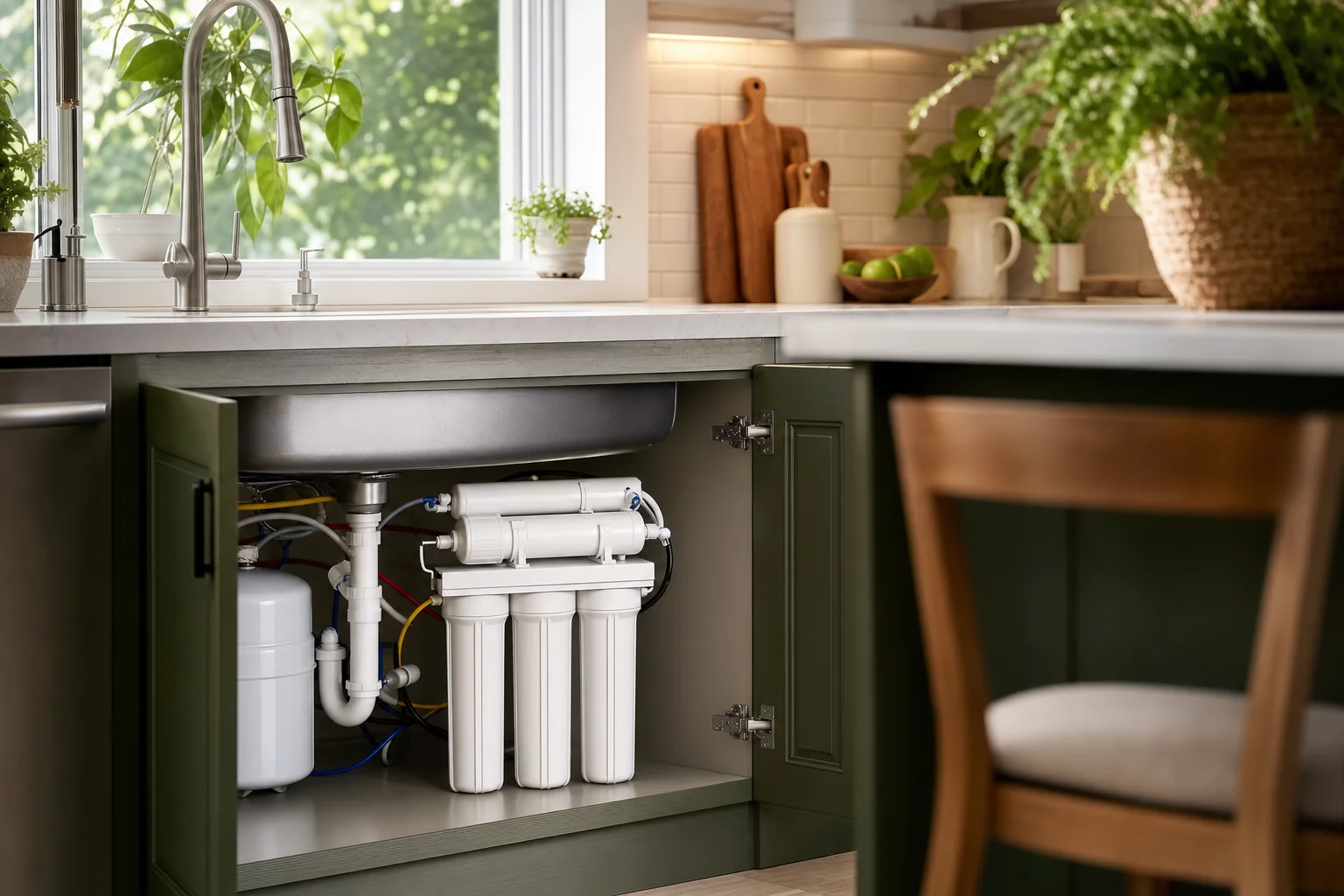
Our Top Picks
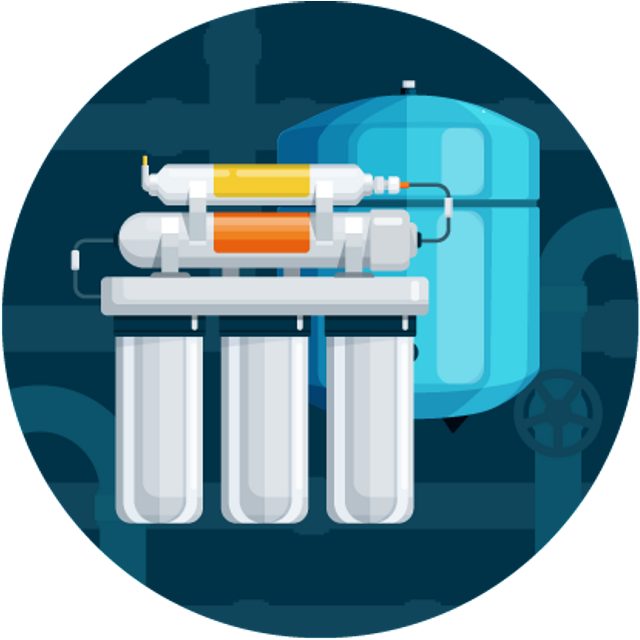
Reverse Osmosis Treatment Water Test
I retested our under sink reverse osmosis water filtration setup this winter because our old kitchen filter was doing that annoying thing where the water still tasted “fine” but not clean. Slight chlorine smell. A little flat. And after a plumber bumped the tubing during a dishwasher repair, I wanted to check every fitting again instead of trusting the cabinet wasn’t quietly turning into a swamp.
For 2026, my pick for most homes is still a standard tank-style RO system with easy-to-find replacement filters and a remineralization stage — specifically the iSpring RCC7AK if you want good taste without paying tankless-system money. If your cabinet is tiny or you hate the idea of a storage tank, the Waterdrop G3P800 is the cleaner-looking option, but it costs more and depends heavily on proprietary cartridges. That matters. Filters are where “sustainable” claims either hold up or fall apart.
Under sink reverse osmosis water filtration: what we actually tested for
I care about five things with RO systems:
- Does the water taste noticeably better after a week, not just on day one?
- Does the faucet drip, sputter, or feel cheap?
- Are the fittings forgiving enough for a careful DIY install?
- How much filter plastic are we throwing away every year?
- What happens after the novelty wears off and you’re just making coffee at 6:20 a.m.?
We’ve lived with a tank-style under sink reverse osmosis water filtration system in a normal, slightly chaotic kitchen — compost bin under the sink, refillable soap bottle, too many rags, one dog who thinks cabinet doors are suspicious. Not a lab. But we did do the unglamorous stuff: paper towel leak checks, overnight pressure checks, taste comparisons, and a post-install water test.
One thing I’d buy again without hesitation is a separate water test. RO systems are great at reducing dissolved solids, but “great” shouldn’t mean guessing. We used the Reverse Osmosis Treatment Water Test after flushing the system and again after the filters had settled in. It gave us more confidence than staring at a cheap TDS pen and pretending one number tells the whole story.
A TDS meter is useful. It’s not magic.
My short list after living with these systems
I’m not going to pretend every under-sink RO unit is wildly different. A lot of them follow the same basic recipe: sediment filter, carbon filter, RO membrane, post-carbon polish, small faucet, storage tank. The differences show up in the annoying places — filter availability, tubing quality, drain saddle design, how the faucet feels, and whether replacement cartridges are reasonably priced or weirdly locked down.
1. iSpring RCC7AK — the one I’d put in most kitchens
The iSpring RCC7AK is my current “don’t overthink it” recommendation for under sink reverse osmosis water filtration. It’s a tank-style, multi-stage RO system with an alkaline remineralization stage, which matters if you dislike the slightly empty taste that plain RO water can have.
The advantage is taste. Our coffee tasted better with this style of system than with a basic RO setup that had no remineralization. Not dramatic. More like: fewer sharp edges, less flatness, better tea. My spouse noticed it before I said anything, which is usually my best sign that I’m not just convincing myself a product worked.
The other win: standard-style filters. Not every cartridge is proprietary, and that makes long-term ownership less painful. Replacement costs vary, so I’d check current pricing before buying, but we’ve found standard filter sets easier to source and less irritating than sleek tankless cartridges.
The disadvantage? Space. The storage tank eats cabinet room. If you already keep bulk dish tablets, trash bags, rags, and a compost caddy under there, you’ll rearrange everything. We had to move our bin to the left side and mount the filter bracket higher than I first wanted. Not hard. Just fiddly.
Install difficulty: medium. If you can drill a faucet hole or already have an extra soap-dispenser hole, you’re fine. If you have stone counters and no spare hole, pause. That’s the part I would not casually DIY unless you know what you’re doing.
2. APEC ROES-50 — sturdy, simple, not fancy
The APEC ROES-50 is the system I’d choose for someone who wants boring reliability and doesn’t care about tankless displays or mineral taste. It’s a classic 5-stage tank RO unit, and that’s the appeal. Fewer “smart” parts. Fewer things trying to look futuristic under a sink where nobody sees them.
The water tasted clean but a little flatter than the iSpring RCC7AK in our side-by-side drinking test. For cooking, ice cubes, dog water, and the kettle? No issue. For sipping room-temperature water all day, I preferred remineralized RO.
Specific advantage: easy mental model. Filters, membrane, tank, faucet. Done.
Specific disadvantage: no remineralization unless you add it separately. Some people love ultra-neutral RO water. I don’t. It made our pour-over coffee taste thinner, especially with lighter beans.
Filter waste is moderate. You’re still replacing multiple cartridges, and the RO membrane has its own schedule. But the cartridges aren’t massive, and availability is decent. If you’re trying to reduce plastic waste, buy the right system once and maintain it instead of cycling through pitcher filters every month. That’s been our bigger win.
3. Waterdrop G3P800 — best if cabinet space is the problem
The Waterdrop G3P800 is the system I want to love more than I do. It’s tankless, fast, clean-looking, and much less cabinet-cluttering than a tank system. If you live in an apartment or have one of those cursed under-sink layouts where the garbage disposal, dishwasher line, and shutoff valves all fight for space, tankless starts making sense.
Its big advantage is footprint. No pressure tank. The body mounts neatly, and filter changes are usually less messy because the cartridge design is more contained. The faucet and indicator setup also make it easier to know when filters need attention.
But — and this is a big one — proprietary cartridges are the tradeoff. You’re not just buying the system. You’re buying into its replacement filter ecosystem. That can be fine if you value convenience and clean design. It’s less fine if your sustainability priority is low-waste, widely available replacement parts.
Tankless RO systems also need electricity. Not a huge amount, but it’s another plug under the sink. In a grid-down situation, a tank-style system with stored water has a small practical advantage. Not enough to matter for everyone. But if you’re building a resilient kitchen, it’s worth thinking through.
4. Home Master TMAFC-ERP — efficient idea, bulky reality
The Home Master TMAFC-ERP Artesian Full Contact is interesting because it includes a permeate pump and remineralization. The permeate pump can reduce wastewater compared with a basic tank system because it helps the RO membrane work more efficiently as the tank fills. That’s the kind of feature I actually like — not green branding, just better mechanics.
Taste was strong. In a good way. The remineralized water had more body than plain RO and worked well for coffee.
The downside is cabinet chaos. There’s more going on: extra tubing, more components, and a slightly more intimidating install if you’re not used to RO layouts. The first time I installed a system with more lines than expected, I labeled each tube with painter’s tape because I knew I’d forget what went where the second I crawled out from under the sink. Do that. Future-you will be grateful.
Specific advantage: better efficiency design than a bare-bones tank RO system.
Specific disadvantage: more parts under the sink, more opportunities to install something backward if you rush.
5. Brondell Circle RO — compact and tidy, but check filter costs
The Brondell Circle RO is one of the neater-looking tank-style RO systems. It’s more compact than the classic tank-plus-filter-array layout, and it feels designed for people who don’t want their cabinet to look like a science fair project.
I like the compactness. I don’t love that the filters are system-specific. Again, not automatically bad. But before buying, check replacement cartridge cost and availability. If a system looks affordable on day one but the annual filter set is painful, that’s not a sustainable purchase. It’s just delayed sticker shock.
Taste was clean. Not my favorite of the group, but perfectly good. Where it shines is layout. If you want under sink reverse osmosis water filtration and you have limited space but don’t want a powered tankless system, this is a reasonable middle lane.
The leak test I won’t skip again
The first RO system we installed years ago didn’t leak during the first hour. It leaked the next morning.
Not a flood. Worse, honestly — a slow bead of water on the cold-water adapter that quietly soaked the cabinet floor. We caught it because I had shoved a white towel under everything. That towel saved the cabinet.
Here’s the leak routine I use now:
- Dry every fitting completely.
- Push each tube in until it seats, then tug gently.
- Add the locking clips if the system uses quick-connect fittings.
- Turn water on slowly.
- Run a dry paper towel around every connection.
- Wait 20 minutes and do it again.
- Leave a towel under the system overnight.
- Check again in the morning before loading the cabinet back up.
And — important — don’t overtighten plastic fittings. I know the instinct. If snug is good, tighter must be safer. Nope. That’s how you warp threads or crack housings.
Thread seal tape usually belongs on threaded fittings, not quick-connect tubing. Read the manual. Twice if needed. I’ve installed enough “simple” home products to know the skipped sentence is always the one that matters.
Taste: plain RO vs remineralized RO
Plain RO water can taste almost too clean. That sounds ridiculous until you drink it next to remineralized RO.
The APEC-style 5-stage water tasted neutral and crisp when cold. At room temp, it felt a little flat to us. The iSpring RCC7AK and Home Master remineralized systems had more rounded flavor. Tea tasted less hollow. Coffee had better texture. Dog did not care. Dog approved all bowls equally.
If you already add minerals to your coffee water or you’re particular about espresso, you may prefer controlling minerals yourself. Most households won’t bother. We didn’t. That’s why I like a built-in remineralization stage for daily drinking.
Take this with a grain of salt, because water taste depends heavily on your starting water. City chlorine, well minerals, old pipes, seasonal changes — all of it changes the result. That’s another reason I like testing after install rather than trusting brand claims.
We used the Reverse Osmosis Treatment Water Test because RO performance isn’t only about taste. If your system is installed wrong, has a damaged membrane, or isn’t reducing what you bought it to reduce, you want to know early.
Filter waste and the sustainability problem nobody likes talking about
Reverse osmosis wastes water. Filters create plastic waste. That’s true.
So why use one?
Because bottled water is worse in our house. Much worse. Before we installed RO, we’d occasionally buy bottled water during boil-water advisories, fridge filter failures, or when tap water tasted heavily chlorinated after local maintenance. Those “occasional” cases add up. Under sink reverse osmosis water filtration let us refill stainless bottles, make cleaner ice, and stop treating bottled water like a backup plan.
Still, RO is not automatically the greenest choice for every home.
If your tap water tastes good and tests clean, a carbon block under-sink filter may be enough. Less wastewater. Fewer cartridges. Cheaper upkeep.
If you have high dissolved solids, concerning contaminants, salty taste, or a real need for broad filtration, RO makes more sense. Especially if it replaces bottled water.
How to cut waste with an RO system
A few habits help:
- Replace filters on schedule, not randomly early because you’re nervous.
- Test water before replacing the membrane.
- Choose systems with available replacement filters.
- Use rejected water where practical if your setup allows it — some people route it for utility use, though we haven’t done that in our kitchen.
- Fix leaks immediately. A tiny drip ruins the whole sustainability argument.
I’m skeptical of brands that brag about “eco” benefits while locking customers into oversized plastic cartridges that cost a fortune. A sleek filter isn’t automatically a better filter. Sometimes it’s just harder to recycle.
Installation notes from under the cabinet
Most under-sink RO installs are doable if you’re patient, mildly handy, and physically willing to fold yourself into a cabinet for an hour. The hardest parts are rarely the filter housings. They’re the annoying kitchen-specific details.
Our pain points:
- The cold-water shutoff valve was stiff.
- The drain saddle placement was awkward because of the disposal.
- The faucet line wanted to kink behind the sink basin.
- The tank needed more space than the product photos suggested.
- The first flush took longer than I wanted because I was impatient and thirsty.
If you rent, ask before drilling anything. If you own but have quartz, granite, or porcelain counters, don’t casually drill unless you have the right bit and experience. Use an existing soap-dispenser hole if you can. We did, and I have never missed the soap dispenser. A refillable bottle beside the sink is less elegant but less stressful.
Tank systems also need flushing. The first tank or two can taste odd. Not dangerous, just carbon fines and manufacturing taste. Don’t judge the system on the first glass. Flush it properly, then taste.
Replacement filter costs: the part to check before buying
This is where people get burned.
A system can be reasonably priced upfront and still cost too much over five years. Before buying any under sink reverse osmosis water filtration system, look up:
- Annual sediment and carbon filter cost
- RO membrane replacement cost
- Remineralization cartridge cost, if included
- Post-carbon filter cost
- Whether filters are proprietary
- Whether off-brand filters exist — and whether you trust them
- Shipping cost, because some cartridges are weirdly expensive to ship
For the iSpring RCC7AK, replacement filters are commonly available and not hard to compare. That’s one reason I like it.
For the Waterdrop G3P800, cartridge changes are cleaner and simpler, but you’re using Waterdrop’s cartridge format. Convenience costs money.
For the APEC ROES-50, filter availability is one of its stronger points, though you may want to add remineralization if taste matters.
For the Home Master TMAFC-ERP, efficiency and taste are strong, but the component set is more involved.
For the Brondell Circle RO, check filter pricing before you fall for the compact design. It’s tidy, yes. But long-term cost matters more than tidy.
The one I’d buy again
For most homes, I’d buy the iSpring RCC7AK.
Not because it’s perfect. It isn’t. The tank takes space, the install requires patience, and the first flush is boring. But the water tastes good, the remineralization stage solves the flat-RO problem, replacement filters are easier to source than many cartridge systems, and the overall setup feels repairable instead of disposable.
If I had a tiny cabinet, I’d buy the Waterdrop G3P800 and accept the proprietary filter tradeoff. If I wanted the simplest classic RO and planned to remineralize separately, I’d buy the APEC ROES-50. If water efficiency was my biggest concern and I didn’t mind a more complicated install, I’d look hard at the Home Master TMAFC-ERP.
But the system I’d recommend to a friend who texts me from the hardware aisle? iSpring RCC7AK. Buy it once, install it carefully, test the water, and keep a reminder for filter changes.
And please test after install. Taste helps, but it doesn’t tell the whole story. The Reverse Osmosis Treatment Water Test is the kind of unsexy add-on that makes the whole purchase feel less like guesswork.