Organic Throw Blankets: Linen, Cotton and Care Compared (2026)
Choose an organic throw blanket by certification, size and laundry needs, with practical comparisons of cotton, linen and washable wool.
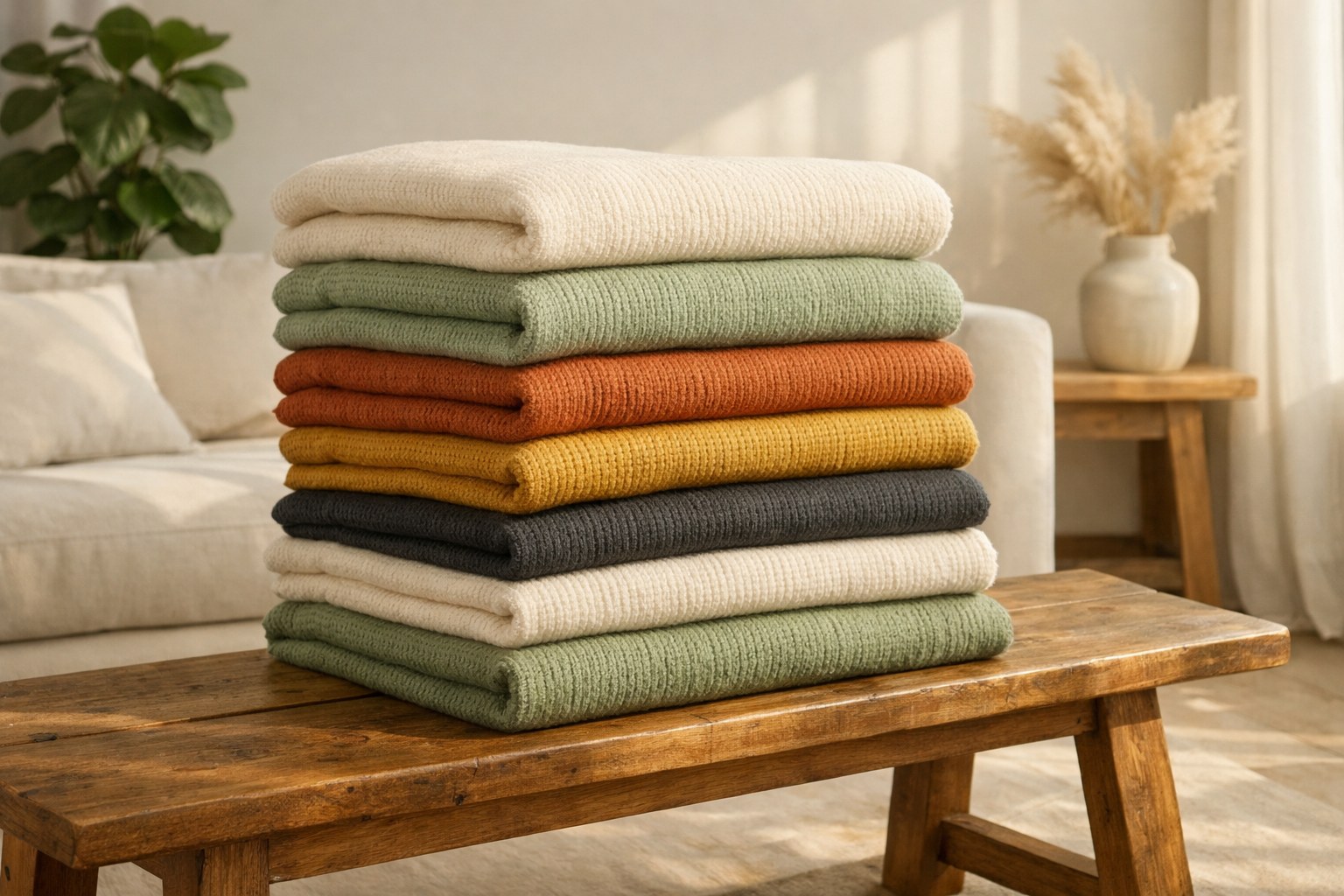
Featured Options Compared in This Guide
Full specs & notes ↓An organic throw blanket needs to satisfy two separate requirements: the organic claim should cover what matters to you, and the finished blanket should fit your everyday care routine. A cotton throw that needs inconvenient drying arrangements may be a poor couch companion. A machine-washable linen throw may suit your household while offering no organic certification.
Start with your laundry requirements, then choose the certification and dimensions. Cotton, linen and wool names alone cannot tell you whether a particular throw belongs in the dryer or how it will look after repeated washing.
What counts as an organic throw?
For organic cotton or linen, GOTS provides a broader production standard than organic-content tracking alone. It covers processing through the finished textile, with chemical, environmental and social requirements. Its two label grades differ: Organic requires at least 95% certified organic fibers; Made with Organic Materials requires at least 70%. GOTS can apply to cotton, flax/linen and wool, among other natural fibers. Source: GOTS
OCS tracks certified organic raw materials through the supply chain. It does not address processing chemicals or social and environmental production conditions beyond organic-material integrity. An OCS claim can therefore be useful when organic content is your priority, but it does not answer the same questions as GOTS. That narrower scope does not establish that an OCS blanket uses damaging finishes or will wear out sooner. Source: Textile Exchange
OEKO-TEX STANDARD 100 addresses testing for harmful substances. It is a different claim from organic fiber certification. When comparing an organic-cotton throw with an OEKO-TEX linen throw, treat those as different purchasing attributes rather than interchangeable badges. Source: OEKO-TEX
Cotton, linen and wool: the practical differences
| Choice | Useful buying direction | Care implications | Organic-claim boundary |
|---|---|---|---|
| Organic-cotton throw | Prioritize a finished throw with the organic certification you want and explicit wash-and-dry instructions | Choose a dryer-permitted model if air drying would make regular cleaning impractical | Cotton content alone does not establish organic status |
| Parachute Vintage Linen Throw, Natural | Consider for a fringed linen throw with a longer listed footprint | Cold gentle machine wash; tumble dry low | The brand lists STANDARD 100, without an organic claim in its product details |
| Pendleton Eco-Wise Wool Fringed Throw | Consider if you want wool and can accommodate line drying | Wash separately, cold and gentle; no bleach; line dry | The product name and wool content do not establish organic certification |
The named examples illustrate different care arrangements; they are not an organic-product ranking. Product specifications come from Parachute and Pendleton. Certification distinctions follow GOTS and OEKO-TEX.
Organic cotton: make drying requirements part of the shortlist
If organic cotton is your main requirement, decide whether you need both machine washing and tumble drying before choosing a weave or color. A waffle or honeycomb description is not enough to establish either permission, and it does not predict a blanket’s lifespan.
Faribault’s cotton care guidance provides a concrete example of how detailed instructions can be: the company permits machine washing and drying for its cotton items, recommends a separate cold gentle wash with diluted gentle detergent, and specifies delicate tumble drying without overdrying. Those instructions apply to its cotton range; they are not a universal recipe for organic cotton. Source: Faribault Mill
For a couch throw you expect to clean frequently, make dryer compatibility a purchase requirement if you lack room to hang a blanket. If certified organic production is also essential, require both attributes in the same item rather than assuming one follows from the other.
Linen: Parachute offers a specific washable example
Parachute describes its Vintage Linen Throw in Natural as garment-washed and garment-dyed linen made from 100% European flax, with fringe and Portuguese manufacture. The listed dimensions are 50 × 70 inches excluding fringe. Its care instructions permit cold gentle machine washing with similar colors and low-temperature tumble drying. Source: Parachute
That makes it worth considering when you want linen and need a permitted dryer option. The page lists OEKO-TEX STANDARD 100 certificate number 16.HUS.93300, but this should not be read as organic certification or a promise of unchanged softness, dimensions or appearance after a year of washing.
The Natural listing is marked final sale. Although the page also displays general return messaging, resolve the item’s return eligibility before buying—especially if you need to judge texture in person. Source: Parachute
Wool: washable can still mean no dryer
Pendleton’s Eco-Wise Wool Fringed Throw is listed as 100% wool, made in the USA with fabric woven in the company’s American mills. It measures 54 × 60 inches plus 3-inch self fringe. Its instructions allow a separate cold gentle machine wash, followed by line drying. Source: Pendleton
Compared with Parachute’s listed dimensions, the Pendleton has a wider but shorter blanket body. Measure a blanket you already find comfortable and compare the body dimensions; fringe should not substitute for the coverage you want.
Choose this wool option only if line drying fits your home. Do not transfer its wash instructions to another wool throw: Faribault distinguishes washable wool from dry-clean-only items and explains that a machine’s hand-wash setting is not equivalent to washing by hand. Source: Faribault Mill
Shrinkage, pilling and regular washing
Do not build a purchase around a universal shrinkage percentage or a fixed weekly washing promise. The product-specific care directions above do not establish those outcomes for every cotton, linen or wool blanket.
Pilling also needs a more careful interpretation than a pass-or-fail label. Faribault explains that abrasion can intertwine surface fibers into pills, including with gentle use, and that pilling cannot be ruled out. For its wool products, it recommends a lint brush or nylon-bristled garment brush used along the length in one direction. Source: Faribault Mill
For everyday use, choose the throw whose permitted cleaning method you can consistently follow. For an organic-first purchase, favor the certification scope you actually want. For a linen-first purchase, Parachute provides concrete dimensions and machine-care instructions, with the final-sale condition requiring attention. For washable wool, Pendleton offers an option that still needs line-drying space.
You can search Amazon for Parachute linen throws. This is an affiliate search link; GreenChoice may earn a commission from qualifying purchases. Results may include different products, so match the exact model before applying the specifications above.
Sources
Products Compared in This Guide
Parachute linen throws
Compare current manufacturer specifications, materials, and package options for Parachute linen throws.
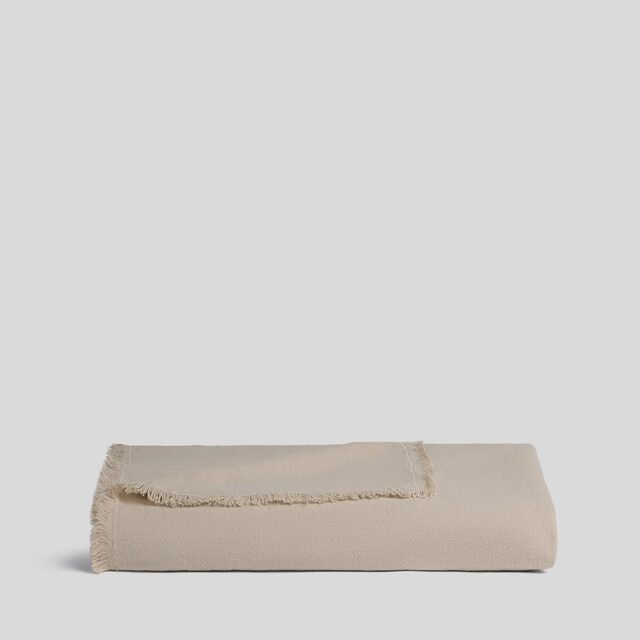
Parachute Linen Throw Blanket
European flax linen, OEKO-TEX certified. Washed without shrinking across 12 months of weekly washing. The linen softens progressively — noticeably better by month 3. No fraying at edges. The fringe is well-sewn and didn't unravel. Best linen throw in the test.
Coyuchi Organic Waffle Blanket (Throw)
GOTS-certified organic cotton waffle weave. Open structure means it's more breathable than loop-pile throws. Machine-washed weekly for 12 months — no pilling, no shrinking beyond the initial 2% wash shrinkage expected from organic cotton. Best certified organic throw in the test.
Pendleton Los Padres Cotton Throw
100% cotton, woven in the USA. Not GOTS-certified but Pendleton's domestic supply chain is traceable. OEKO-TEX certified. The jacquard weave pattern is durable — no pattern degradation at 12 months. Best for buyers who want a heritage-brand, domestically-made throw.