Organic Shower Curtains: Hemp and Cotton Compared
Compare organic hemp and cotton shower curtains by dimensions, care, liner planning, and certification claims, with practical advice for damp bathrooms.
Featured Options Compared in This Guide
Full specs & notes ↓An organic shower curtain needs to fit two routines: showering and laundry. Fiber content helps you choose the textile, but it does not tell you whether the curtain can contain spray without a liner or dry between showers.
For a cotton curtain, Boll & Branch and Quince offer concrete differences in texture, dimensions, and dryer settings. Rawganique offers a hemp alternative, but hemp content alone is not a reason to assume you can remove your liner. Start with the setup you need, then choose a curtain whose care requirements you can follow.
Three curtains to compare
The sizes below come from manufacturer listings. Measure your shower opening and hanging height before choosing. Rawganique’s listing gives size numbers without a unit, so confirm its dimensions before comparing fit with the cotton panels.
| Curtain | Manufacturer-described fabric and design | Listed size | Practical consideration |
|---|---|---|---|
| Rawganique MONTEBELLO | Marketed as 100% organic hemp; configurations include hemp macrame rings and an optional wax bar | 73.5 × 72; unit not stated | A hemp option if fiber choice is your priority; confirm dimensions, care, and liner instructions before buying |
| Boll & Branch Ottoman Ribbed | Described as 100% organic, extra-long-staple cotton; smooth upper section and vertically ribbed lower section | 73 × 73.5 inches | Cold gentle washing and medium tumble drying are permitted by the care guide |
| Quince Organic Luxe Waffle | Described as 100% organic cotton with a honeycomb waffle texture and 12 stitched buttonholes | 72 × 72 inches | Cool washing, no bleach, and either low tumble drying or hanging to dry; the page showed sold out on September 5, 2026 |
Boll & Branch: for a mixed-texture cotton panel
The Ottoman Ribbed curtain combines a smooth top with ribbing below, so choose it if you prefer texture concentrated in part of the panel. The brand describes it as prewashed and preshrunk. That does not establish an exact shrinkage allowance for your bathroom, so use the listed dimensions to assess fit and follow its laundering directions. Source: Boll & Branch.
Its care guide allows a cold gentle cycle, medium tumble drying, and a warm iron. Instructions differ by color: the brand permits non-chlorine brighteners and bleach for whites, while directing owners of colored curtains to use liquid detergent without bleach or brighteners. This matters if your normal bathroom-laundry routine includes whitening products. Source: Boll & Branch.
The product page describes the curtain as OEKO-TEX STANDARD 100 certified and says it is made in a Fair Trade Certified factory. Those are distinct claims about the product and factory; neither provides instructions for using the curtain without a liner. They do not establish mildew resistance or waterproofing. Source: Boll & Branch.
Quince: for an all-over waffle texture
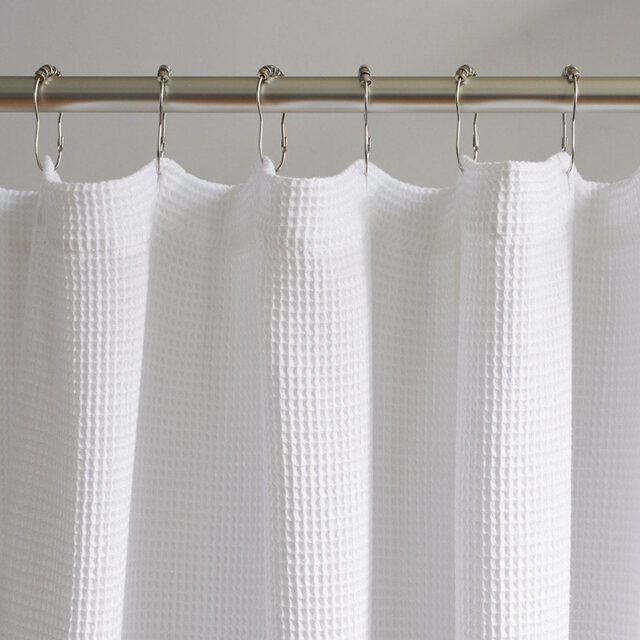
Quince’s Organic Luxe Waffle has a honeycomb design and a smaller listed panel than the Boll & Branch curtain. Its 12 stitched buttonholes give you a specific attachment detail to match to your hooks. Sources: Quince, Boll & Branch.
Choose between these cotton options partly by laundry habits. Quince directs a cool wash with mild detergent, prohibits bleach, and permits low tumble drying or hanging to dry. Boll & Branch permits medium dryer heat and has separate whitening instructions for white curtains. Use the care instructions for the panel you buy rather than applying one dryer setting to both. Sources: Quince, Boll & Branch.
Quince’s page showed the curtain as sold out on September 5, 2026. If you need an immediate replacement, confirm a restock before planning around it. Its advertised 365-day return period also should not be treated as a shower trial: the page says returned items must be unused, tagged, and in their original packaging. Source: Quince.
Rawganique: for shoppers specifically seeking hemp
Rawganique identifies the full-size MONTEBELLO as an organic hemp curtain and offers configurations with hemp macrame rings, extra rings, and an optional wax bar. Select the configuration deliberately rather than assuming every package contains the same accessories. Its size appears as 73.5 × 72 without a stated unit; ask for the width and length with units before ordering. Source: Rawganique.
The hemp designation and optional wax do not establish how much spray the panel will contain, how quickly it will dry, or whether your installation can operate without a liner. If avoiding a separate liner is the reason for buying it, obtain the manufacturer’s instructions for that exact setup before committing. Do not apply the cotton curtains’ wash or dryer settings to this hemp panel.
Decide on the liner before choosing the outer curtain
Treat the decorative panel and the water barrier as separate purchasing decisions. None of the product details above establishes a liner-free setup. An organic fiber claim does not answer whether water will pass through a particular weave under your shower’s spray.
For a straightforward replacement, keep a serviceable liner and select the outer curtain by fit, appearance, and care. If you want to remove the liner, make explicit manufacturer guidance for direct-spray use a purchase requirement. Do not substitute a second cotton or hemp panel on the assumption that any natural fabric will function as a liner.
Measure from the hanging points, allowing for the hooks you use. Check that the water barrier can hang inside the tub or shower enclosure as intended, while the decorative panel avoids dragging on the bathroom floor. Include any necessary liner and hooks when comparing the total purchase, without assuming an annual replacement schedule.
Organic content and certification answer different questions
A brand’s statement that a curtain contains organic cotton or hemp is not interchangeable with finished-product GOTS certification. Global Standards explains that certification of a fabric component alone does not establish certification of the finished item; the processing chain matters. Source: Global Standards.
If finished-product GOTS certification is a requirement, look for the product’s logo, label grade, certification body, and certified entity’s certification number. The standard’s organic label grade requires at least 95% certified organic fibers; another grade covers 70–94%. These details help distinguish a traceable certification claim from a general organic-fiber description. They do not describe water containment or drying performance. Source: Global Standards.
Make drying part of the setup
EPA identifies moisture control as central to mold prevention and recommends indoor relative humidity below 60%, ideally 30–50% where possible. This is general building guidance, not a guarantee that a wet curtain will remain free of mold below a particular room-humidity reading. Source: EPA mold prevention.
After showering, spread the curtain so wet folds are not tightly bunched together, and give the curtain and liner room to dry. Inspect the bottom edges and nearby floor for persistent wetness. If the panel remains damp between uses, address airflow and room humidity before expecting a different fiber to solve the problem. EPA recommends correcting leaks, investigating musty areas, and using ventilation or dehumidification as appropriate to conditions. Source: EPA mold prevention.
Follow each curtain’s washing instructions instead of imposing one wash temperature, dryer setting, or monthly schedule on every fabric. Repeated dampness needs attention even when laundry is up to date.
What about PVC, PEVA, and indoor air?
EPA explains that VOCs can be released by many household materials and that health effects depend on the chemical, exposure level, and duration. Its guidance supports ventilation and reducing identified emission sources; it does not provide a shower-curtain comparison of PVC, PEVA, hemp, and cotton. Source: EPA on VOCs.
Choose organic textiles for the material and production attributes that matter to you, without treating the fiber name as proof of zero emissions or a guaranteed health improvement. A useful purchase still needs to fit the enclosure, contain water with its intended liner arrangement, and tolerate your care routine.
For optional marketplace browsing, search Amazon for Rawganique hemp shower curtains. This is an affiliate search link, and GreenChoice may earn a commission from qualifying purchases. Search results may include other brands or accessories; the link does not establish availability of the MONTEBELLO.
Sources
Products Compared in This Guide
Rawganique hemp shower curtains
Compare current manufacturer specifications, materials, and package options for Rawganique hemp shower curtains.
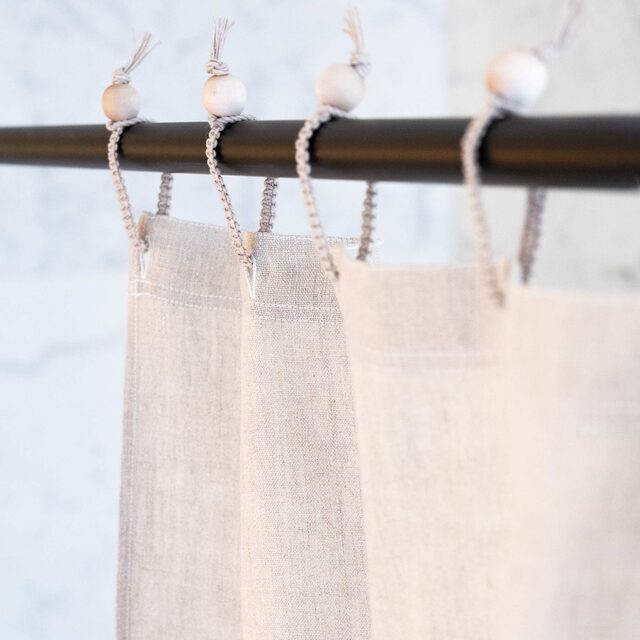
Rawganique Hemp Shower Curtain (72x72)
The only no-liner curtain that genuinely stayed put in a daily-use bathroom. Hemp's natural water resistance kept water spotting minimal, dried in under 90 minutes between showers. Heavy enough not to billow in a steamy room. Expensive but I'd buy it again.
Coyuchi Organic Cotton Shower Curtain
GOTS-certified, heavyweight waffle weave. Needs a hemp or organic cotton inner liner to function — won't repel water on its own. Drapes beautifully, washes without shrinking past wash 5.
West Elm Organic Cotton Shower Curtain
Best price-to-quality in the test. GOTS-certified cotton, decent weight, multiple color options. Pair with an inner liner for daily use. Mildewed slightly at the bottom hem by month 3 — manageable with monthly wash.