Organic Bath Towels: Coyuchi Air Weight vs Boll & Branch Plush
Compare Coyuchi Air Weight’s 550 GSM twill construction with Boll & Branch Plush’s 700 GSM terry, including organic claims, set contents and care.
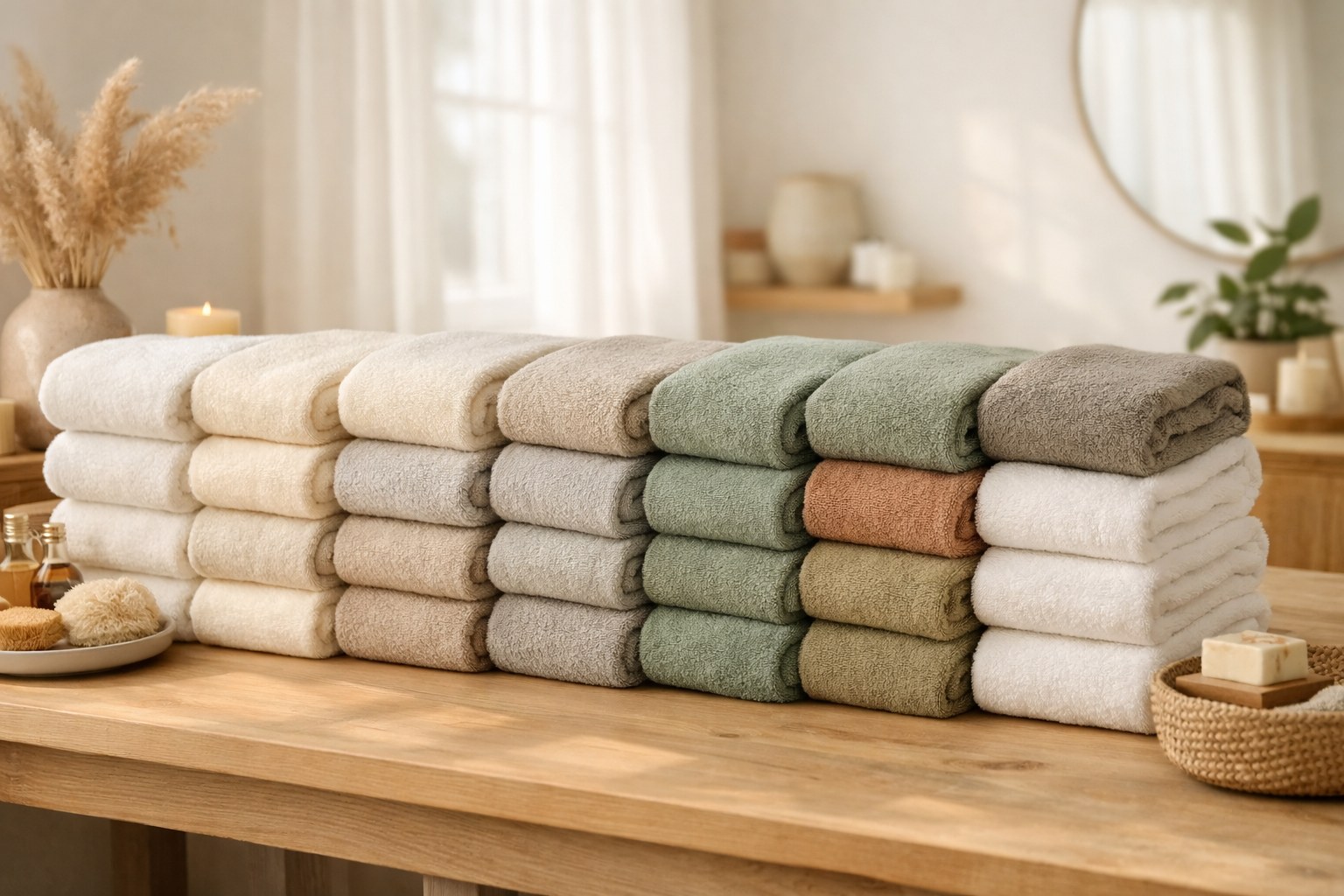
Featured Options Compared in This Guide
Full specs & notes ↓Consider Coyuchi Air Weight if you prefer a lower fabric weight and textured twill construction; consider Boll & Branch Plush if you enjoy substantial terry towels. Coyuchi lists Air Weight bath towels at 550 GSM, while Boll & Branch lists Plush at 700 GSM. Both brands describe their towels as 100% organic cotton and identify them as GOTS certified. Coyuchi product details · Boll & Branch product details
That gives these organic bath towels a concrete construction difference. It does not establish which absorbs more water, feels softer after washing or dries sooner between showers.
Air Weight and Plush compared
| Feature | Coyuchi Air Weight | Boll & Branch Plush |
|---|---|---|
| Listed bath towel fabric weight | 550 GSM | 700 GSM |
| Construction | Long cotton loops with a twill weave | Terry loops made with low-twist yarns; long-staple cotton |
| Fiber content | 100% organic cotton | 100% organic cotton |
| Origin stated by brand | Cotton grown and woven in India | Made in India |
| Product certifications listed by brand | GOTS, Fair Trade and MADE SAFE | GOTS and OEKO-TEX STANDARD 100 |
| Six-piece set | Two bath towels, two hand towels, two washcloths | Two bath towels, two hand towels, two washcloths |
| Hanging feature | No hanging-loop detail stated | Woven hanging loop |
Sources: Air Weight Organic Towels, Plush Bath Towel and Plush Bath Towel Set.
GSM expresses fabric weight per square meter. Air Weight therefore has less mass per unit of fabric area than Plush. That is useful if you want to move away from heavier towel fabric, but it does not tell you either finished towel’s total weight or folded thickness. Coyuchi also describes Air Weight as dense, so the name should not suggest a thin, flat towel.
Coyuchi associates its twill weave with varied texture and makes claims about efficient drying off and absorbency improving over time. Boll & Branch emphasizes softness and absorbency from its low-twist terry. These are manufacturer descriptions, with no comparable performance results establishing a winner. In particular, drying your skin efficiently is a different question from how quickly a wet towel dries on a rack. Coyuchi · Boll & Branch
Choose the size and quantity you will use
For a matching bathroom set, compare the two six-piece sets directly. They contain the same mix of towel types. Boll & Branch specifies bath towels at 30 × 58 inches, hand towels at 20 × 30 inches and washcloths at 13 × 13 inches. Coyuchi’s product text gives the quantities but no dimensions, so equal piece counts should not be read as equal coverage. Before ordering Air Weight, obtain the measurements for your selected size and compare them with a towel you already find comfortable. Plush set contents · Air Weight set contents
For bath towels alone, avoid buying extra hand towels and washcloths by default. Boll & Branch sells an individual Plush bath towel and a separate Starter Bundle containing four 30 × 58-inch bath towels. The Starter Bundle serves a different need from its six-piece set. Individual towel · Starter Bundle
Coyuchi’s selector includes individual bath towel and bath sheet options as well as its six-piece set. A bath sheet is an option to investigate if coverage is your priority, but its dimensions are needed before deciding whether it solves that problem. Air Weight options
If you hang towels from hooks, Plush’s listed woven loop is a practical reason to favor it. If your current towels feel too substantial, Air Weight’s lower GSM is a reason to consider it. Neither feature alone settles how well the towel will dry in your bathroom.
Organic content and certifications
Both product pages separately state 100% organic cotton and GOTS certification. GOTS addresses organic fiber content alongside processing requirements, including chemical inputs, wastewater and working conditions. Its organic label grade requires at least 95% certified organic fibers; its made-with-organic-materials grade requires at least 70%. The brands’ 100% cotton claims are therefore more specific than the minimum fiber thresholds of GOTS alone. Coyuchi · Boll & Branch · GOTS criteria
Plush also lists OEKO-TEX STANDARD 100, which concerns testing textiles and their components for harmful substances. It does not establish organic content. Coyuchi lists Fair Trade and MADE SAFE alongside GOTS. Those different certification lists do not provide a basis for declaring either towel universally safer or better for sensitive skin. OEKO-TEX STANDARD 100 · Coyuchi certifications
Fit the care instructions into your routine
Both brands call for cold washing with similar colors. Coyuchi specifies a gentle cycle, low tumble drying and prompt removal. It suggests detergent without bleach or whiteners and wool dryer balls instead of softeners or dryer sheets. Air Weight care
Boll & Branch specifies liquid detergent without bleach or brighteners and allows low or medium tumble-dryer heat. It recommends washing towels separately from clothes and bedding to avoid snags and fabric damage, and notes that initial shedding can occur. If you prefer one mixed laundry load, consider whether you will make room for that separate towel wash before choosing Plush. Plush care
For towels that stay damp between uses, give them space to hang open and address bathroom moisture. EPA recommends venting bathrooms outdoors and controlling indoor humidity to limit mold growth. Choosing between 550 and 700 GSM does not replace ventilation. EPA moisture guidance
Sources
Products Compared in This Guide
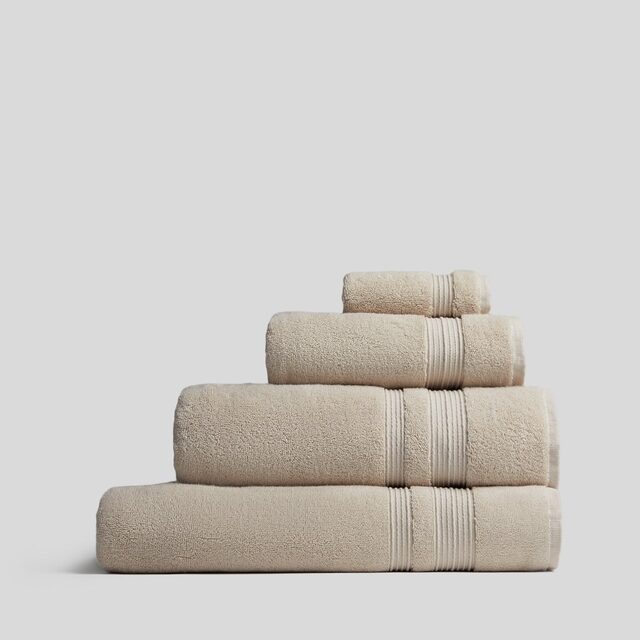
Parachute Classic Turkish Cotton Bath Towels (Set of 2)
600 GSM long-staple Turkish cotton. Absorbency improves measurably across the first 10 washes. Dries faster than most 600 GSM towels. No synthetic finishes — conditioned with a vinegar wash on arrival and ready to perform by day 3. One of the best towels in the test across all metrics.
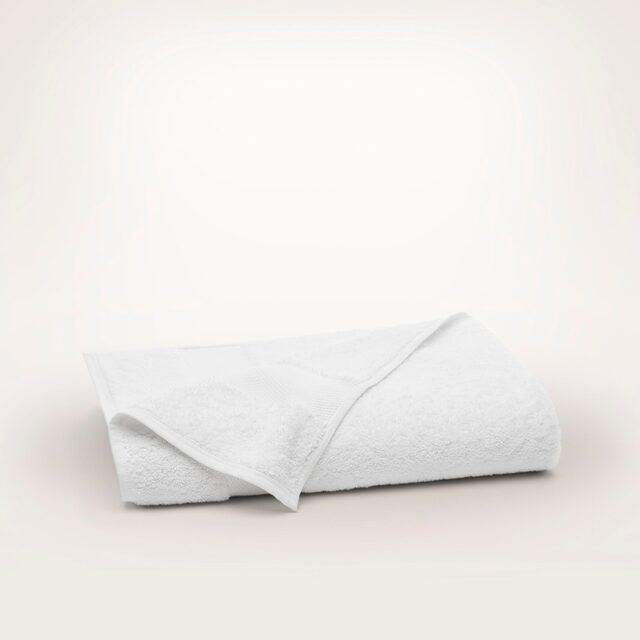
Boll & Branch Plush Bath Towel
GOTS-certified, Fair Trade. 600 GSM organic cotton. Softest towel in the test at 6 months — the GOTS certification means no synthetic finishes blocking the cotton loops from the start. Absorbency peaked at wash 8 and stayed consistent through 6 months.
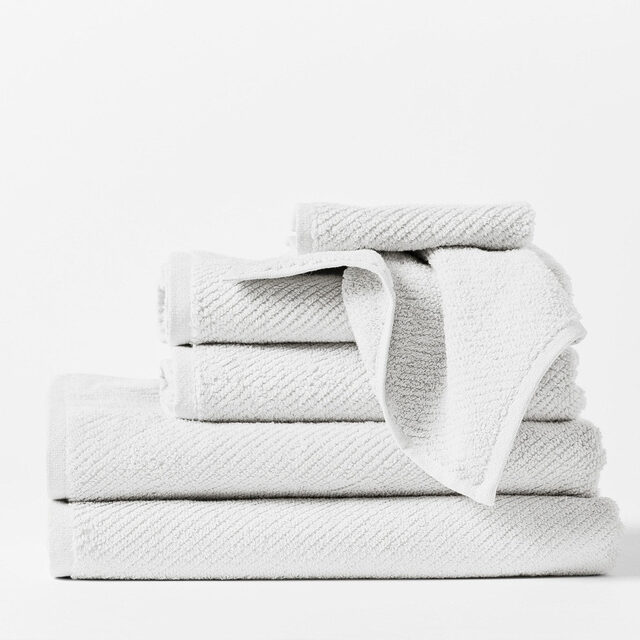
Coyuchi Air Weight Organic Towel
GOTS-certified, 450 GSM waffle weave. Significantly faster drying than loop-pile towels (30 minutes vs. 2–4 hours). Absorbency is high from day 1 — no heavy sizing coat on the open weave. Best pick for humid bathrooms or households where towels don't fully dry between uses.
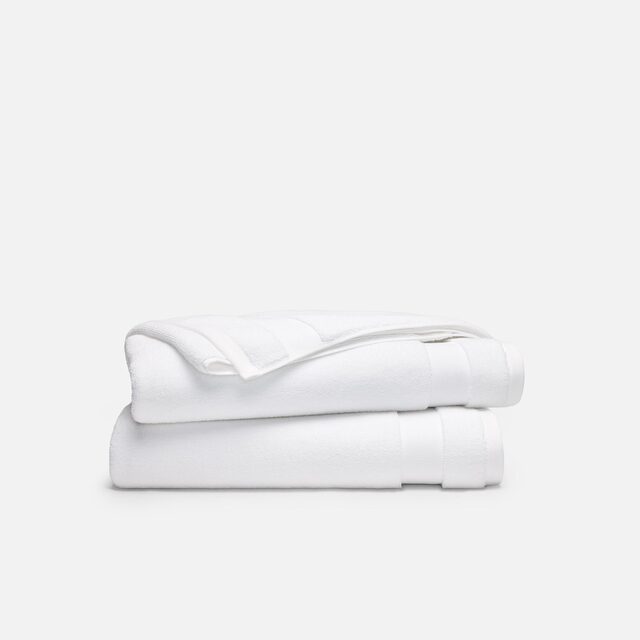
Brooklinen Super-Plush Bath Towels (Set of 2)
700 GSM Turkish cotton. The heaviest towel in the test — plush hotel feel. OEKO-TEX certified. Absorbency at 6 months matched Parachute and Boll & Branch. Slow to dry between uses (4+ hours) — fine for low-humidity climates or households with good bathroom airflow.
Frequently Asked Questions
How does Coyuchi Air Weight differ from Boll & Branch Plush?
Coyuchi lists 550 GSM fabric with long cotton loops and a twill weave. Boll & Branch lists 700 GSM terry with low-twist yarns and long-staple cotton. Both describe their towels as entirely organic cotton. These specifications do not establish a drying-speed or absorbency winner.
Do both six-piece sets contain the same types of towels?
Yes. Coyuchi’s Air Weight six-piece set and Boll & Branch’s Plush Bath Towel Set each contain two bath towels, two hand towels and two washcloths. Boll & Branch’s separate Starter Bundle contains four bath towels.
Does OEKO-TEX STANDARD 100 mean a towel is organic?
No. STANDARD 100 concerns testing for harmful substances. Organic fiber content is a separate claim; GOTS includes organic fiber requirements and textile processing criteria.