A Fragrance-Free Laundry Routine: Washing, Drying, and Machine Care
Build a fragrance-free laundry routine with measured detergent, product-specific stain treatment, practical drying choices, and appliance-directed care.
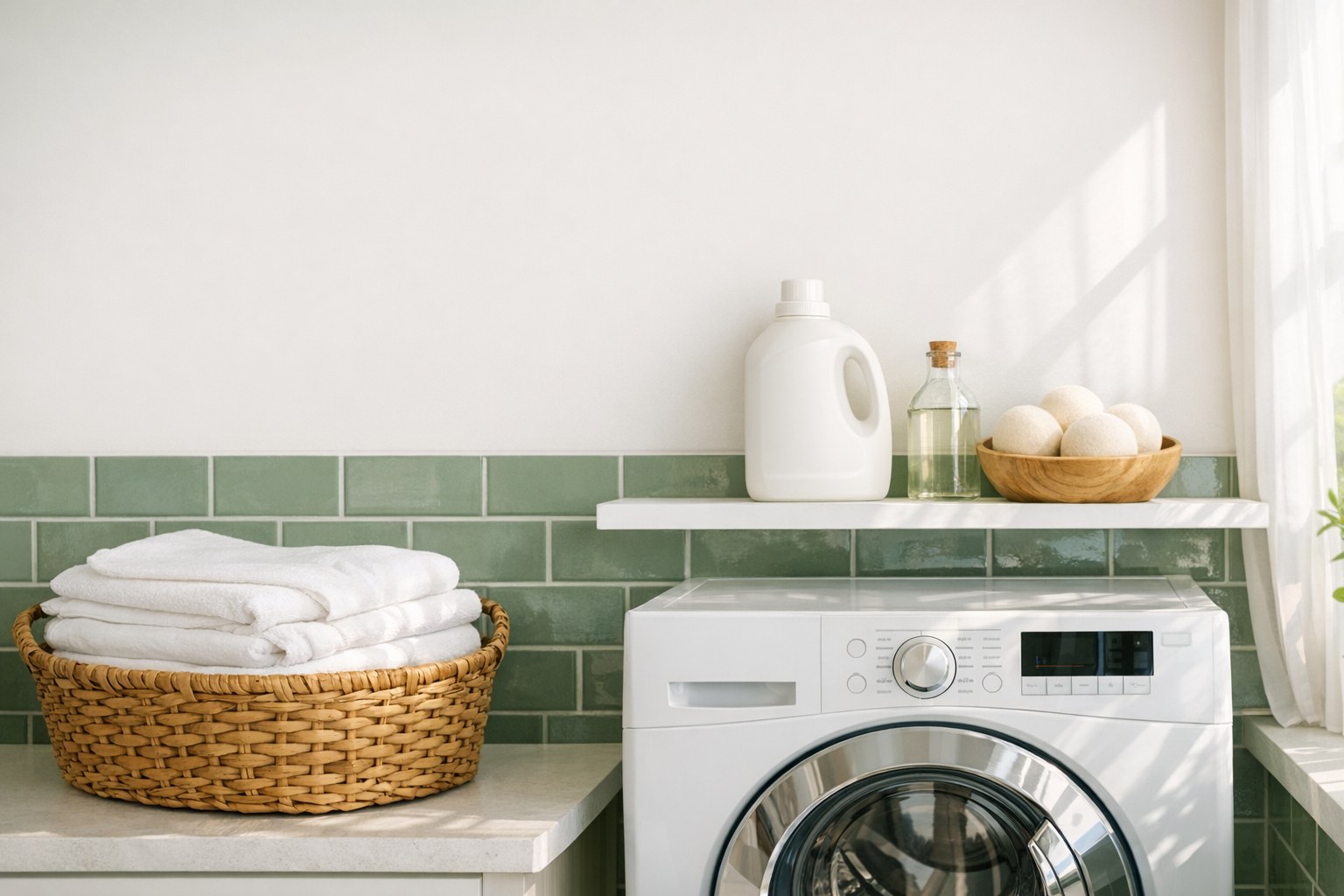
Featured Options Compared in This Guide
Full specs & notes ↓Start with a fragrance-free detergent, measure its recommended dose, and decide whether you need any additional laundry products. Skipping scented softener, scent beads, and fragranced dryer sheets keeps those products from adding fragrance to the routine. You do not need to replace each one with another additive.
Plan each load around three decisions: which items share compatible washing and drying instructions, how much of your detergent to use, and whether a stain needs treatment before washing.
Choose a formula, then learn its directions
For children with eczema, the American Academy of Dermatology recommends detergent without fragrance or dyes. It also distinguishes fragrance-free products from unscented products, which may use masking fragrance. If choosing laundry products for a child with eczema is difficult, ask the child’s dermatologist for recommendations. AAD guidance.
Two standard liquid formulas illustrate why a fragrance-free routine still needs product-specific decisions:
| Detail | Seventh Generation Liquid Laundry Detergent—Free & Clear | ECOS Hypoallergenic Laundry Detergent—Free & Clear |
|---|---|---|
| Fragrance and dyes | Manufacturer states neither is included | Manufacturer states no added fragrance or dyes |
| Enzymes in the ingredient list | Protease, amylase, and mannanase blends | No enzymes listed; the brand lists an enzyme version separately |
| Listed preservatives | Benzisothiazolinone and methylisothiazolinone | Phenoxyethanol and methylisothiazolinone |
| Published dose | 1.5 fl oz for medium loads; 2.2 fl oz for larger or heavily soiled loads | One ounce for HE loads; two ounces for standard loads |
Sources: Seventh Generation ingredients and directions and ECOS ingredients and directions.
These are formula distinctions, not a cleaning-performance ranking. Neither ingredient list is preservative-free. If you already have a clinician-identified ingredient to avoid, compare that exact ingredient with the formula rather than choosing by the Free & Clear name alone.
Measure for the detergent and machine you have
Keep the measuring instructions with the bottle. Switching brands can mean changing both the amount and where you put it:
- Seventh Generation: Its directions specify the dispenser for HE machines. For standard washers, start the machine, add detergent, then add clothes. Use the larger stated dose for larger or heavily soiled loads.
- ECOS: Its HE instructions allow the dispenser or washer drum and specify one ounce. Its standard-load dose is two ounces.
Do not interpret one brand’s cap line as another brand’s measure, or automatically halve either dose. These instructions apply to the standard liquids described here; use the directions on your particular formula. Seventh Generation directions, ECOS directions.
Both manufacturers describe these detergents as working across water temperatures, and both require compliance with garment care instructions. Choose a temperature the items permit; a detergent’s temperature claim does not establish a universal cold-wash rule or a disinfection procedure.
Use a defined stain treatment
For an item whose care instructions permit it, ECOS gives a specific pretreatment method: apply a small amount of its liquid to the stain, rub it in, and proceed directly to machine washing. Set up the load before applying the detergent so you can follow that sequence. ECOS pretreatment directions.
Do not turn that instruction into an overnight soak or transfer it automatically to another detergent. If a garment requires a different cleaning method, leave it out of this routine. There is no need to assemble a collection of homemade stain mixtures to follow the manufacturer’s pretreatment method.
Decide whether softener earns a place
Try a load without softener and assess whether you want a change in feel or static. If you choose to use one, select a fragrance-free version for this routine and follow both its directions and the garment’s restrictions.
Vinegar does not have to replace omitted softener. Before putting it in a washer or dispenser, consult the appliance instructions for that use. Never combine vinegar with chlorine bleach: Poison Control explains that the mixture releases chlorine gas that irritates the eyes and airways. Poison Control vinegar precautions.
Make drying a separate decision
Before combining items in one dryer load, compare their drying instructions. Put items that require a different method aside when sorting, so they do not enter the dryer by habit. Choose machine drying, rack drying, or another permitted method around those instructions and the space available.
A fragrance-free routine does not require dryer balls or dryer sheets. If you already use dryer balls, follow their instructions alongside the dryer’s directions and leave off added fragrance. Do not make a purchase decision around an assumed percentage reduction in drying time or a promised number of uses.
For dryer upkeep, use the appliance manual to establish the lint-filter cleaning schedule and any exhaust-maintenance requirements. If drying becomes persistently slow, consult its troubleshooting instructions before buying another laundry accessory.
Give machine care its own routine
Keep a short appliance-care note with the model number and the relevant manual instructions. Record:
- Whether the washer has a cleaning cycle, what product it permits, and the specified schedule.
- How to clean the dispenser and any accessible seals or filters.
- What the manual recommends for the door or lid between loads.
This makes maintenance a repeatable task instead of an improvised response to odor. If the washer smells, use its odor-troubleshooting instructions to choose the next action. Avoid treating a scented additive as the solution to a maintenance problem.
For related reading, see the fragrance-free laundry detergent guide.
Sources
- Seventh Generation: Liquid Laundry Detergent—Free & Clear — ingredient disclosure, dosing, machine instructions, and temperature claims.
- ECOS: Hypoallergenic Laundry Detergent—Free & Clear — ingredient disclosure, dosing, temperature claims, and pretreatment directions.
- American Academy of Dermatology: Finding eczema-friendly products — fragrance-free and dye-free detergent guidance for children with eczema.
- Poison Control: Vinegar precautions — the hazard of mixing vinegar with chlorine bleach.
Products Compared in This Guide
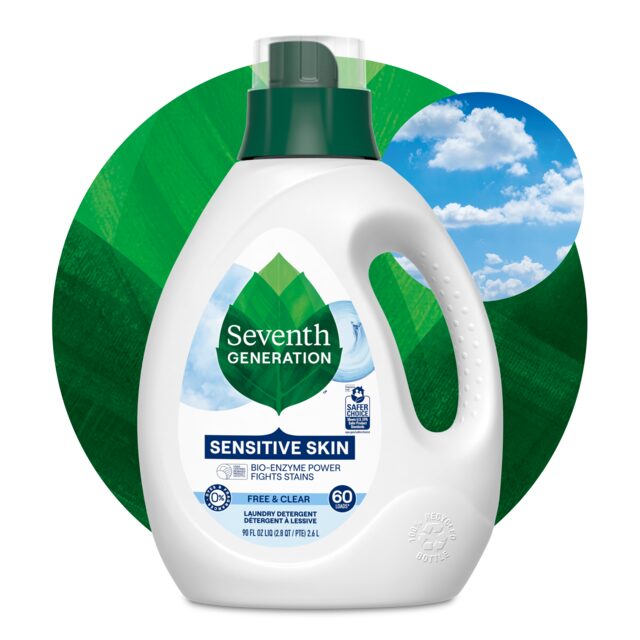
Seventh Generation Free & Clear Laundry Detergent
EWG-A, fragrance-free, enzyme-based. The standard for non-toxic laundry — widely available, reasonably priced, and effective across all standard laundry tasks.
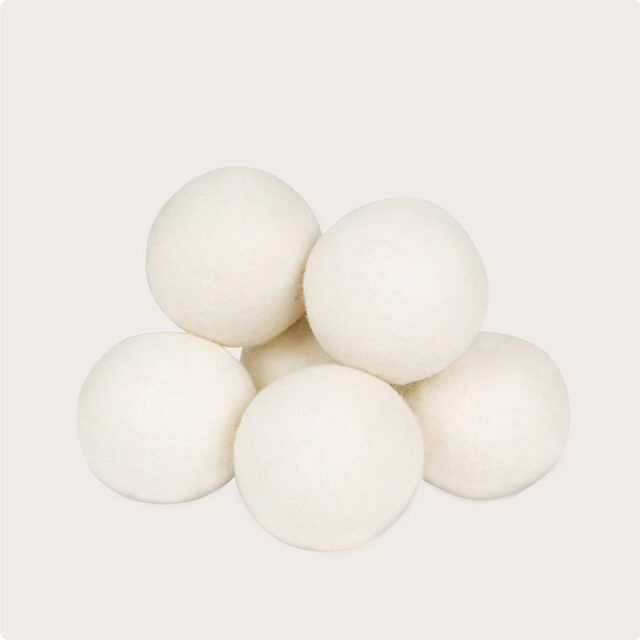
Wool Dryer Balls (6-pack)
The dryer sheet replacement. Reduces dry time 15-25%, eliminates static without fragrance chemicals, and lasts 1000+ loads. Add a drop of essential oil to one ball if you want scent.
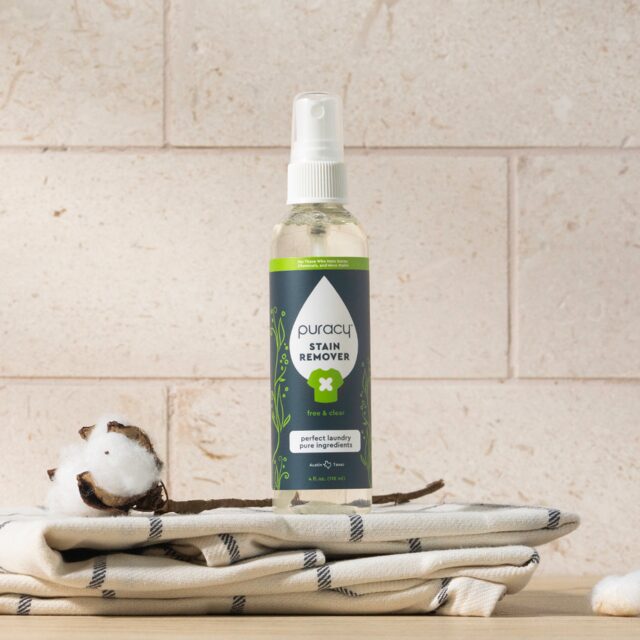
Puracy Natural Stain Remover (Fragrance-Free)
Six-enzyme pre-treatment spray. The most effective non-toxic stain remover tested — handles protein, starch, oil, and tannin stains without optical brighteners or chlorine bleach. Fragrance-free option available.
Frequently Asked Questions
Do I need vinegar instead of fabric softener?
No replacement additive is necessary just because you omit softener. Consult your appliance instructions before adding vinegar, and never mix it with chlorine bleach: Poison Control warns that the combination releases chlorine gas.
Can I use the same detergent dose after switching brands?
Do not carry over the old dose automatically. Seventh Generation's standard Free & Clear liquid specifies 1.5 fl oz for medium loads; ECOS' standard Free & Clear liquid specifies one ounce for HE loads and two ounces for standard loads. Follow the directions for the formula you have.
Should all laundry be washed cold?
Both detergent manufacturers describe these liquids as suitable for all water temperatures, but that does not establish the right temperature for every garment or hygiene need. Both also instruct users to follow garment care directions.