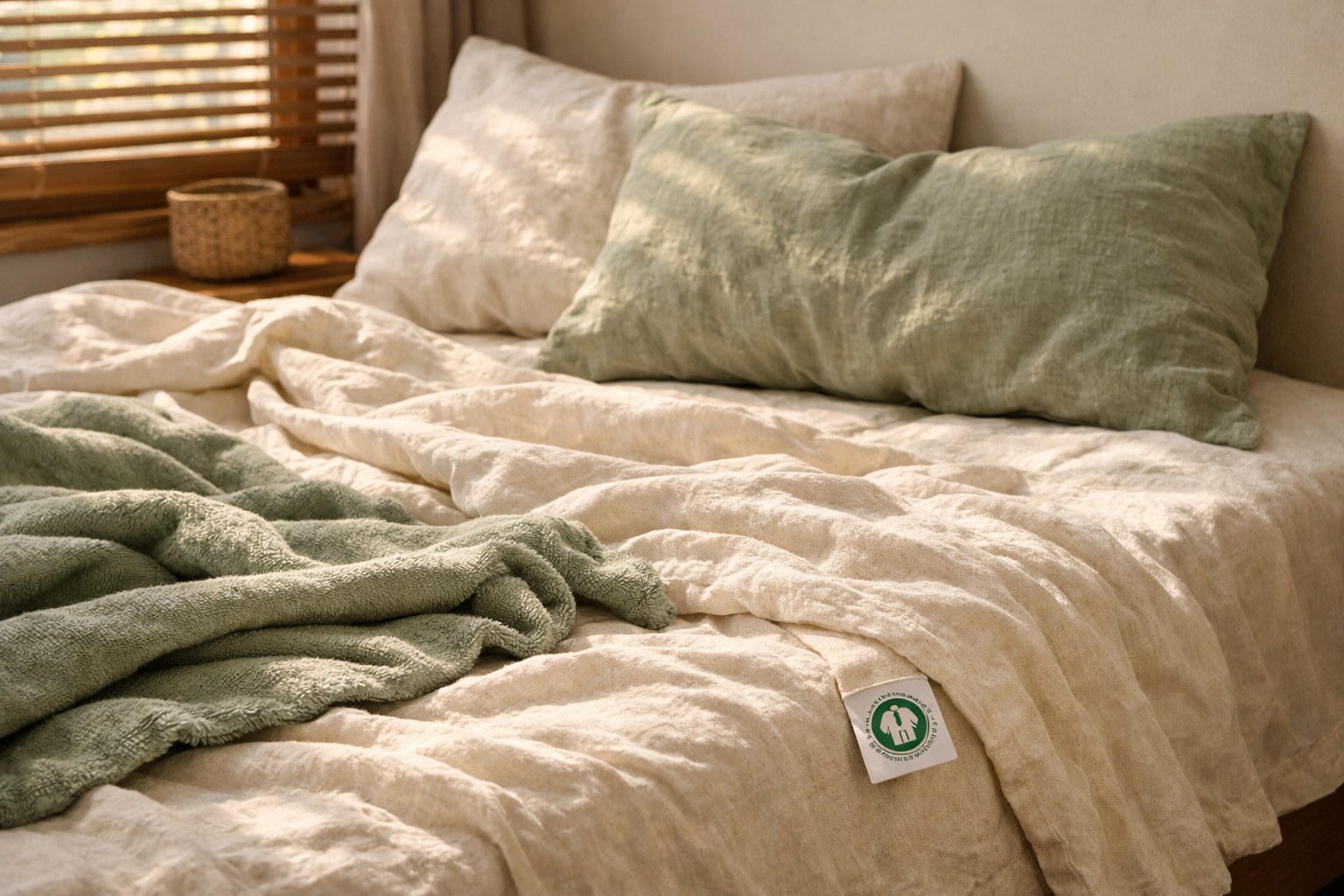
Featured Options Compared in This Guide
Full specs & notes ↓Organic bedding involves three separate choices: the certification you require, the fabric you prefer against your skin, and the materials inside pillows and comforters. Set those priorities before comparing complete sets. An organic cotton cover, for example, does not tell you whether a pillow contains polyester.
Avocado’s specific 200-thread-count percale and 400-thread-count sateen pages describe GOTS certification for the materials and finished products. CULTIVER’s Forest linen set and Parachute’s linked sateen set provide fabric comparisons, but neither listing identifies those sets as organic. Parachute also marks every listed size and both styles sold out as of September 5, 2026. Avocado percale, Avocado sateen, CULTIVER, Parachute.
What an organic certification premium buys
GOTS covers textile processing beginning with stages such as cotton ginning and flax retting, then manufacturing and trading. Raw fibres must already meet an accepted organic production standard. Its requirements address chemical inputs, wastewater treatment, traceability and social criteria, with independent certification. GOTS programme explanation.
A GOTS-labelled textile must contain at least 70% certified organic fibres; the organic label grade requires at least 95%. These thresholds do not mean that every component is organic. The programme separately addresses accessories and additional fibres. It also covers processing routes for flax, hemp, wool and silk, so certification is not limited to cotton. GOTS fibre and manufacturing requirements.
For a GOTS-labelled purchase, look for the licence number and certifier reference associated with the goods. A label can use the manufacturer’s or buyer’s licence number, and retailers do not always need their own certification. GOTS labelling and retail provisions.
Certification gives you defined sourcing and processing requirements to pay for. Comfort, mattress fit and care remain separate decisions; the certification does not predict which sheet you will prefer or how long it will last in your home.
Cotton and linen: which specifications matter to your bed?
These comparisons use manufacturer descriptions. Fabric feel is subjective, so treat words such as crisp and silky as starting points for choosing a swatch or deciding which construction to consider.
| Sheet example | Manufacturer description | Practical distinction |
|---|---|---|
| Avocado 200-thread-count Percale Organic Cotton Sheets | Long-staple organic cotton; GOTS certification stated for materials and finished product; described as crisp and lightweight | Standard and deep-pocket specifications for different mattress heights |
| Avocado 400-thread-count Organic Cotton Sheets | Single-ply sateen; GOTS certification stated for materials and finished product; described as silky | A sateen alternative with a listed 16-inch pocket |
| Parachute Sateen Sheet Set | Long-staple Egyptian cotton; OEKO-TEX STANDARD 100 listed; described as smooth with a subdued sheen | Fabric/specification comparison only: every listed size and both styles marked sold out |
| CULTIVER Forest Linen Sheet Set with Pillowcases | European flax linen, 165 gsm, prewashed; OEKO-TEX certification stated | Individual components can be omitted; complimentary swatch offered; organic status not stated |
Sources: Avocado percale specifications, Avocado sateen specifications, Parachute specifications and availability, CULTIVER specifications.
Organic cotton: choose construction and depth before thread count
Avocado’s broader comparison lists thread counts of 200, 270, 300, 400 and 600, along with percale and sateen weave entries. A higher number alone does not resolve your fabric preference, fit or set contents. Avocado cotton-sheet comparison.
For a concrete choice, the 200-thread-count percale page lists standard pockets for mattresses up to 16 inches deep and deep pockets up to 22 inches. Its Split King set includes two Twin XL fitted sheets, a King flat sheet and two pillowcases. The 400-thread-count sateen page lists a 16-inch pocket. Both pages describe a flat sheet, fitted sheet and two pillowcases in ordinary sets, with one pillowcase for Twin and Twin XL. Percale fit and contents, Sateen fit and contents.
That makes mattress height a useful first filter: a topper that takes your bed beyond the sateen’s listed depth is a reason to examine the deep-pocket percale specifications. For a bed within both depth limits, compare the brand’s crisp percale and silky sateen descriptions against sheets you already enjoy.
The care instructions differ too. Avocado specifies cold washing for this percale and warm washing for this sateen. Both allow line drying or low tumble drying and advise against fabric softeners, bleach and whiteners. Each of these two product pages states a 100-night trial, subject to terms, and a one-year warranty. Those terms apply to these named products; they are not a promise of service life. Percale care and terms, Sateen care and terms.
Avocado’s return policy lists sheet sets and pillowcases under a 100-day window, with a maximum of one return per household in that category. Stained, unsanitary or damaged bedding is excluded, shipping fees are nonrefundable, and a return or exchange ends future trial eligibility for that product type. Purchases through another retailer follow that retailer’s return arrangements. Do not order several sets expecting unrestricted trials. Avocado return policy.
Parachute sateen: an unavailable fabric comparison
Parachute describes the linked set as smooth, silky cotton without silk’s shiny appearance. The page lists 100% long-staple Egyptian cotton and OEKO-TEX STANDARD 100, reference 16.HUS.93300. It does not identify this set as organic or GOTS-certified. Parachute materials.
The set specification includes a fitted sheet, top sheet and pillowcase set; King and California King sets include King pillowcases. However, Full, Queen, King and California King sizes, plus both Back Envelope and Side Open styles, are marked sold out. Use these details to compare fabric and set construction, rather than planning an immediate purchase of the linked set. An Amazon search does not establish availability of that exact product. Parachute set details and stock status.
If the set becomes available, factor return costs into the decision. Parachute lists a 60-day window for eligible returns. Its FAQ specifies a fee for mail and Happy Returns Bar returns, with free eligible in-store or store-credit returns; final-sale items are excluded. Shipping and handling fees are nonrefundable. Parachute return terms.
CULTIVER linen: sample the texture before washing a set
CULTIVER describes its Forest linen as prewashed for softness, with a fabric weight of 165 gsm. The fitted sheet has continuous elastic, the pillowcases use envelope closures, and the flat sheet has a bordered edge. The selector allows shoppers to omit pieces, which can be useful when only a fitted sheet needs replacing. CULTIVER product details.
Prewashing describes the manufacturer’s treatment; it does not guarantee immediate comfort for every sleeper or rule out an adjustment period. Request the complimentary swatch to assess texture and colour at home. A swatch can inform your preference, but it cannot reproduce the fit or overnight feel of a complete set. CULTIVER softness description and swatch option.
There is a consequential return constraint: CULTIVER recommends washing new linen before sleeping in it, but says washed linen cannot be returned. Assess the swatch and try the unwashed sheets on the bed for fit before committing to laundering. Its care page recommends a gentle warm wash up to 40°C, line drying or warm tumble drying, and avoiding bleach, soaking and fabric softeners. CULTIVER care and washed-item restriction.
Compare the same basket—and measure the whole mattress
Measure width, length and total height with your topper and protector in place. Then compare the exact size specifications. Avocado’s two sheet pages list Queen fitted sheets at 60 × 80 inches, with the pocket choices described above; CULTIVER’s size guide lists a Queen at 153 × 204 cm with a 41 cm depth. Depth alone does not establish fit across all three dimensions. Avocado percale size guide, Avocado sateen size guide, CULTIVER size guide.
Build a comparison basket containing only what you need: fitted sheet, optional flat sheet, and the correct pillowcase size and quantity. A configurable set’s starting total may represent fewer pieces than a complete set. Keep serviceable pillowcases and flat sheets if replacing them adds nothing you need.
Organic sheets do not describe the pillow or comforter
Read the cover, inner pouch and fill separately. Nest’s Holiday Bundle page illustrates the distinction with its Easy Breather Natural pillow: the cover is listed as 32% organic cotton, 67% polyester and 1% spandex; the inner pouch is cotton; and the fill is 75% shredded latex and 25% polyester. The page describes removable fill and a storage bag for adjusting the amount. This construction contains synthetic materials despite the organic cotton component. The bundle’s dated promotion is not a current purchase offer. Nest component specifications.
Buffy’s Cloud comforters illustrate a different priority: recycled synthetic fill and laundry convenience. Neither version below is presented here as an organic comforter.
| Cloud version | Shell and fill described by Buffy | Specified care |
|---|---|---|
| All-season | Lyocell sateen shell; fill identified as 100% GRS-certified recycled PET | Cold machine wash; low-heat drying or air fluff |
| Winter Weight | Lyocell sateen shell; polyester fill | Dry clean only |
Source: Buffy Cloud materials and care.
If machine washing is essential, the all-season instructions suit that requirement; the winter version requires a dry-cleaning arrangement. Both list corner loops for securing a duvet cover. The winter specifications do not state the all-season version’s recycled-fill certification, so keep those claims separate. If avoiding synthetic fill is your priority, neither Cloud version nor the Nest pillow construction above meets it. Buffy version details, Nest fill composition.
Buffy also separates its seven-night deferred-charge trial from its 50-night returns policy. The deferred-charge arrangement excludes final-sale orders and orders paid through Shop Pay, Apple Pay or PayPal. Budget for the charge after the shorter trial even if you are still within the return window. Buffy payment and return terms.
Spend first on the requirement that would otherwise rule a purchase out: finished-product organic certification, adequate mattress depth, an acceptable texture, or manageable laundering. Then compare the total for the pieces you actually need, including return and care costs. A matching bed does not require replacing every layer at once.
For narrower decisions, see our bedding certification guide and budget organic sheet guide.
Optional Amazon browsing: search Parachute sateen sheets or search CULTIVER linen sheet sets. These are affiliate search links; GreenChoice may earn a commission from qualifying purchases. Results may include other products and do not establish availability of the exact sets discussed. Match the materials, size, set contents and seller’s return terms before ordering.
Sources
- Global Standards: How the GOTS programme works
- Avocado: Cotton-sheet comparison
- Avocado: 200-thread-count Percale Organic Cotton Sheets
- Avocado: 400-thread-count Organic Cotton Sheets
- Avocado: Return policy
- Parachute: Sateen Sheet Set
- Parachute: FAQ and return terms
- CULTIVER: Forest Linen Sheet Set with Pillowcases
- CULTIVER: Product care
- Nest Bedding: Holiday Bundle component specifications
- Buffy: Cloud Comforter materials, care and trial terms
Products Compared in This Guide
Parachute sateen sheets
Compare current manufacturer specifications, materials, and package options for Parachute sateen sheets.
CULTIVER linen sheet sets
Compare current manufacturer specifications, materials, and package options for CULTIVER linen sheet sets.

Coyuchi Organic Percale Sheet Set (Queen)
The benchmark for GOTS-certified percale. 300 thread count feels crisper than most 500 TC cotton. After 90 nights and 30 washes, the fabric is still tight — no pilling, no thinning. Made in India from certified-organic California-grown cotton. The single most durable organic set in the test.
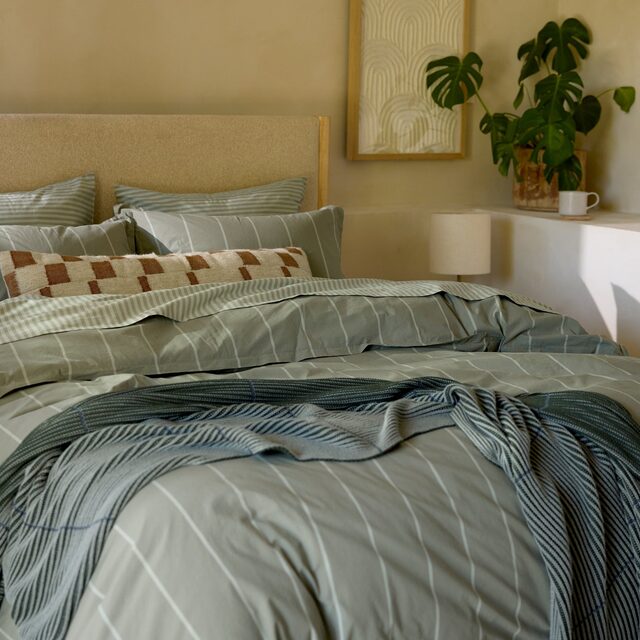
Parachute Organic Sateen Sheet Set (Queen)
GOTS-certified, silkier drape than the Coyuchi percale. 300 TC sateen weave means it's less breathable but warmer — better for cold climates. Held its sheen through 30 washes. The fitted sheet elastic held; no corner slippage on a 14-inch mattress.
Frequently Asked Questions
What does GOTS certification mean for bedding?
GOTS sets environmental and social requirements for textile processing, manufacturing and trading, with independent certification. GOTS-labelled textiles require at least 70% certified organic fibre; the organic label grade requires at least 95%.
Can linen or hemp bedding be GOTS-certified?
Yes. GOTS includes processing routes for flax and hemp, alongside cotton, wool and silk. A fibre's eligibility does not establish certification of an individual product.
Is Parachute's linked Sateen Sheet Set organic and available?
The page describes Egyptian cotton and lists OEKO-TEX STANDARD 100, without identifying the set as organic or GOTS-certified. On September 5, 2026, every listed size and both styles were marked sold out.
Can the Buffy Cloud Comforter be machine washed?
Buffy specifies cold machine washing and low-heat drying or air fluff for the all-season Cloud. The Winter Weight Cloud instructions specify dry cleaning only.