Cloth Diaper Systems: GroVia, Esembly and Thirsties Compared
Choose between snap-in inserts, fitted diapers and prefolds with covers. Compare real construction, sizing and laundry needs before building a stash.
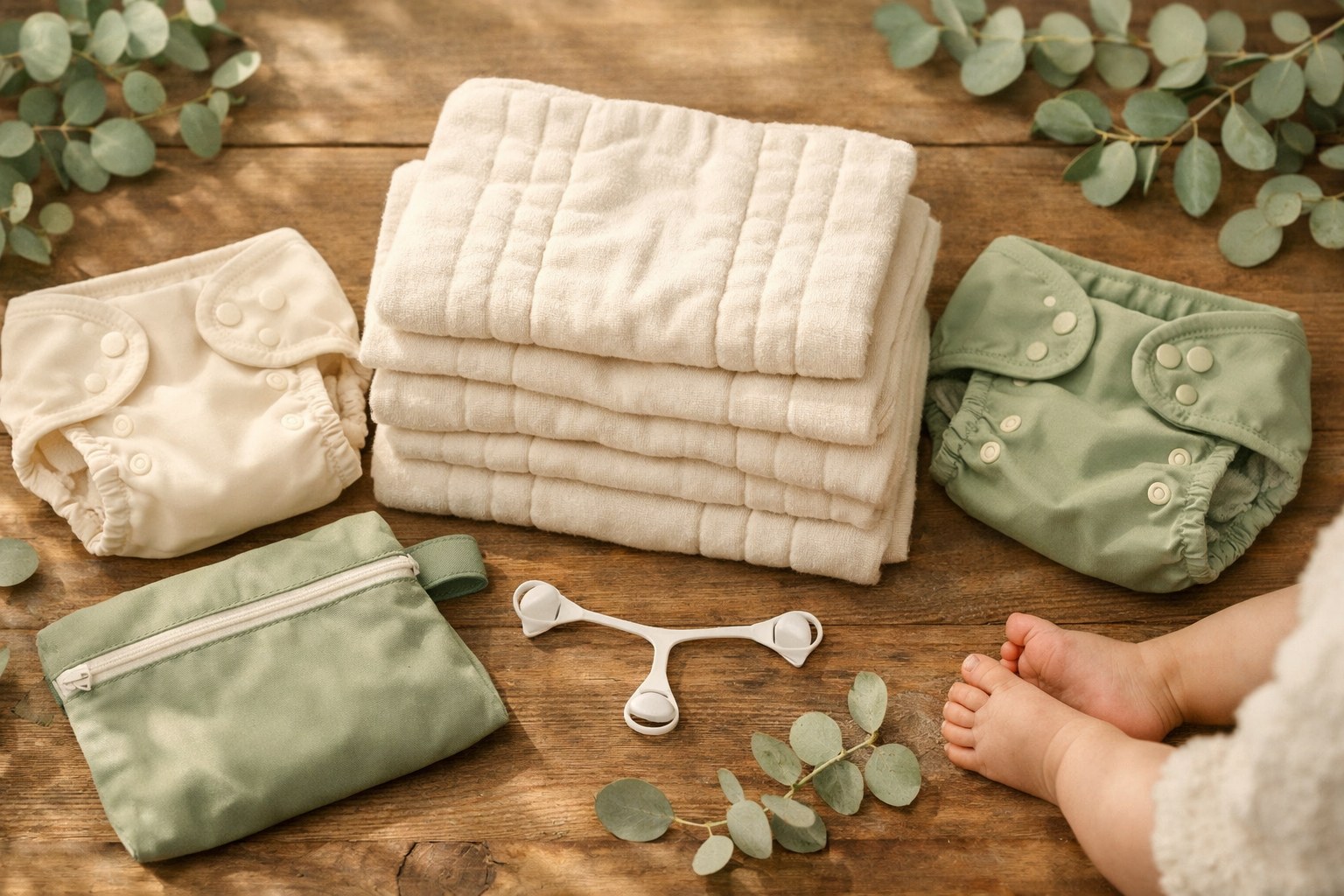
Featured Options Compared in This Guide
Full specs & notes ↓Choose a fitted diaper and cover if you want an absorbent layer that closes without folding; choose prefolds and a cover if you prefer separate, simple components; choose a hybrid if snapping an insert into a shell suits your caregivers. The best system is the one that fits your baby and your laundry access.
GroVia, Esembly and Thirsties illustrate these differences. They are not interchangeable complete diapers: a Thirsties Duo Wrap by itself absorbs no urine, and an Esembly Inner by itself is not waterproof.
This article contains Amazon search links that may earn a commission. Affiliate disclosure.
Compare the complete system
| System | What you need for a change | Documented construction | Why choose it? |
|---|---|---|---|
| GroVia Hybrid with Organic Cotton Soaker Pad | Hybrid Shell plus snap-in pad | Pad has five organic cotton absorbent layers, polyester/cotton gussets, and a polyester TPU backing | An insert that attaches to its matching shell, with other absorbency options available |
| Esembly Inner Snap with Outer | Fitted Inner plus waterproof Outer | Inner Snap is unbleached organic cotton twill, with elastic and snap closures | No folding or pocket stuffing; two pieces to put on |
| Thirsties Duo Wrap with an appropriate prefold, flat or fitted | Waterproof wrap plus separately selected absorbency | Wrap is polyester with waterproof TPU laminate | Flexibility to select and replace absorbent pieces separately |
Sources: GroVia pad materials and care, Esembly Inner Snap, and Thirsties Duo Wrap.
An organic cotton absorbent layer does not make the whole diaper plastic-free. Waterproof laminates, elastic and closures remain part of many reusable systems. Their usefulness is in repeated diaper changes, not a promise that they can go into household compost.
Size and fit before quantity
GroVia describes the Hybrid system for approximately 8–30+ pounds, with fit depending on body shape. Esembly lists Inner Snap size 1 for approximately 7–17 pounds and size 2 for 18–35 pounds. Thirsties lists Duo Wrap size 1 for 6–18 pounds and size 2 for 18–40 pounds on the current product page. These are brand guidelines, not a guarantee that every baby in the range will fit equally well.
At a fit check, look for gaps around the legs, make sure absorbent cloth is tucked inside the waterproof cover, and check that the waist closes comfortably. Extra absorbency can make a diaper bulkier and change the leg seal. If a diaper leaks, determine whether the absorbent layer was saturated or whether liquid escaped through a gap before buying a new system.
With a prefold, decide whether you will fold it into a pad inside a compatible cover or use a secured fold. Ask the cover maker about compatibility; a random insert should not be assumed to snap into a GroVia shell.
The laundry differences are real
GroVia’s Organic Cotton Soaker Pad instructions call for five to six preparation wash-and-dry cycles, then routine laundering about every two days. That instruction applies to this pad, not every brand or every waterproof shell. Its normal routine includes a prewash and main wash with detergent. GroVia care directions.
Esembly recommends washing its diapers every two to three days and explicitly advises against soaking them, including in plain water. Thirsties describes a warm prewash followed by a hot main wash and extra rinse. Follow the directions for the exact components you own; combining pieces from several brands means finding a routine that is compatible with all of them.
Keep dirty-diaper storage inaccessible to children. Do not use a soaking bucket: GroVia’s FAQ also rejects wet-pail soaking. Once solid-food stool needs removal, follow the diaper maker’s handling instructions and keep the task separate from food-preparation areas.
A diaper cream’s medical suitability and its compatibility with cloth are different questions. Some balms can leave residue on absorbent fabric. Follow the diaper manufacturer’s cream or liner guidance without withholding treatment your child’s clinician recommends. See the baby skincare guide.
Build a trial, then price the stash
Try a few changes in the system before buying a large bundle. Let every regular caregiver practice assembly and check how long the pieces actually take to dry in your home. Start part-time if washing access is uncertain.
Esembly’s full-time newborn recommendation is 24–30 Inners and 6–8 Outers. Treat that as a recommendation for its system, not a minimum everyone must buy. A household using cloth only at home needs a different quantity.
Compare the cost of absorbent pieces, covers, later sizes, storage bags, detergent, laundry and replacements. Do not assume resale will recover a fixed percentage. Used covers with failing elastic or peeling laminate may need replacement even when the absorbent fabric looks good.
These are search pages, not exact offers: GroVia Hybrid, Esembly Inner and Outer, and Thirsties Duo Wrap. Compare bundle contents carefully.
Sources
Products Compared in This Guide
GroVia Hybrid
Compare current manufacturer specifications, materials, and package options for GroVia Hybrid.
Esembly Inner and Outer
Compare current manufacturer specifications, materials, and package options for Esembly Inner and Outer.
Thirsties Duo Wrap
Compare current manufacturer specifications, materials, and package options for Thirsties Duo Wrap.