Featured Options Compared in This Guide
Full specs & notes ↓A sustainable bedroom plan starts with deciding what deserves to stay. Keep a bed frame that works, bedding you use and window coverings that meet your needs. Then address the specific problem behind each purchase: fit, comfort, worn fabric, difficult cleaning or insufficient darkness.
Treat the room as a connected system. A taller mattress affects fitted sheets; a new insert must fit its duvet cover; a washable pillow cover does not mean the whole pillow can go into the washer. These details can determine whether a purchase remains useful.
Plan the room before choosing brands
| Part of the room | Decision to make | What to include in the purchase plan |
|---|---|---|
| Mattress and frame | Does the current sleeping surface need replacement? | Base compatibility, delivery access, handling and return costs |
| Sheets and protector | Are they worn, uncomfortable or poorly fitted? | Mattress depth including any topper, and whether a flat sheet is wanted |
| Pillow | Is the problem height, feel or cleaning? | Adjustable fill, pillowcase size and separate cover/core care |
| Blanket or duvet | Is another layer actually needed? | Existing layers, insert dimensions and cleaning method |
| Curtains | Is the goal privacy, darkness or decoration? | Window coverage, hardware and any separate liner |
| Bedside rug | Would it serve a useful purpose? | Placement, door clearance and a manageable cleaning routine |
Put decorative additions after functional needs. A matching bedroom collection is optional; compatible pieces are more useful than a complete set you cannot comfortably maintain.
Mattress: compare the construction and the commitment
The Avocado Green Mattress is a latex-and-coil hybrid. Avocado lists organic Dunlop latex, wool and a cotton-blend cover, with different constructions for its Firm, Medium and Plush versions. Its published heights are 11.5 inches, 11 inches and 13 inches respectively. Those differences matter when retaining fitted sheets or adding a topper. Source: Avocado
Avocado describes the feel as springy and responsive rather than a slow memory-foam sink. Use that description to decide whether to try it, not as a guarantee of comfort. The brand positions Firm toward back and stomach sleepers and Plush toward side sleepers; personal preference still needs room in the decision. Source: Avocado
Organic does not mean plastic-free. Avocado states that the finished mattress is GOTS-certified and its Dunlop latex is GOLS-certified. Its detailed construction also discloses a cover containing 3% elastane, polypropylene coil pockets and an EVA-based adhesive joining pocket rows. The comfort layers are secured by tufting, but that does not make the entire mattress adhesive-free. These disclosures are particularly relevant if avoiding synthetic components is a purchase requirement. Source: Avocado
Keeping your frame is worth planning around. Avocado specifies support requirements for third-party bases, including slats no more than 5 inches apart and at least 2.5 inches wide, plus a center support leg reaching the floor for queen and larger sizes. Its page says box springs and direct floor placement invalidate warranty coverage. Measure the existing base before committing to the mattress. Source: Avocado
The page advertises a one-year trial with a minimum 30-day period, a return fee and nonrefundable delivery-related charges. Its 25-year limited warranty becomes prorated after the first ten years. Budget for the possibility of a return, and treat warranty coverage separately from expected lifespan. Source: Avocado
Sheets, pillows and upper layers: choose by the job
These examples serve different purposes. Buying all of them is unnecessary.
| Item | Manufacturer-disclosed construction | Practical reason to consider it | Important boundary |
|---|---|---|---|
| Quince Signature Giza Cotton Sateen Sheet Set | Giza cotton sateen; fitted sheet accommodates mattresses up to 16 inches deep | A smooth sheet option with sets offered with or without a flat sheet | The page does not establish organic or GOTS status. Quince |
| Naturepedic Adjustable Organic Latex Pillow | Cotton fabric; shredded latex with 10% organic cotton batting | Fill can be added or removed instead of accepting a fixed height | Latex certification depends on the option; the core is spot-clean only. Naturepedic |
| Boll & Branch Waffle Bed Blanket | Long-staple organic cotton in a textured waffle weave; listed as GOTS-certified | A separate layer for someone who wants a textured blanket | The brand describes it as midweight, not its lightest or smoothest layer. Boll & Branch |
| Buffy Cloud All Season comforter | Lyocell shell; recycled PET fill listed as GRS-certified | A filled comforter with machine-washing instructions | It contains synthetic fill; the Winter Weight version has different care requirements. Buffy |
Sheets: distinguish cotton type from organic status
Quince describes its Signature Giza set as smooth sateen with a sheen and a slight warmth. Its page lists OEKO-TEX STANDARD 100 certificate BJ025 205360, but does not identify this particular set as organic. Consider it for its disclosed fabric and fit if those match your priorities; it does not meet a requirement for documented organic sheets on the information presented. Source: Quince
The fitted sheet’s stated 16-inch capacity exceeds the published heights of Avocado’s Firm, Medium and Plush models. That makes them candidates for pairing, but measure the complete sleeping surface if a topper or thick pad is involved. Select the version without a flat sheet if you do not use one. Sources: Quince, Avocado
Pillows: adjustment and cleaning are separate benefits
Naturepedic includes an extra bag of shredded latex with its adjustable pillow and offers soft and medium options. The removable outer encasement is machine washable; the inner encasement and fill require spot cleaning and complete drying before reuse. This suits someone willing to adjust fill, but is a poor match for a requirement to machine-wash the entire pillow. Source: Naturepedic
The page specifies GOLS- or FSC-certified latex depending on the option, without clearly mapping that distinction to every selection in the text. If organic latex is essential, ask which fill certification applies to the chosen soft or medium version. A certification list containing both names does not establish that every option carries both. Source: Naturepedic
For marketplace browsing, search Amazon for Naturepedic organic latex pillows. This is an affiliate search link: GreenChoice may earn a commission from qualifying purchases. Search results can include different models and sellers.
Blanket or comforter: decide how you want to layer
Boll & Branch’s Waffle Bed Blanket offers textured cotton without a separate filled insert. The company describes it as a midweight layer and instructs owners to wash cold on a gentle cycle, tumble dry low and avoid bleach and fabric softener. Consider it when an additional removable blanket would solve the problem; do not assume that its all-season description predicts warmth in your room. Source: Boll & Branch
Buffy’s All Season Cloud uses lyocell for the shell and recycled PET for the fill. Its eucalyptus language does not describe the filling. This is a relevant option if recycled synthetic fill fits your priorities, but it does not meet a requirement to exclude polyester. Source: Buffy
Choose the Cloud variant with care in mind: Buffy permits cold machine washing and low-heat or air-fluff drying for All Season, while Winter Weight requires dry cleaning. Both list corner loops for cover ties. The Full/Queen insert measures 90 by 90 inches, so compare actual cover dimensions instead of relying solely on the size name. Keep an existing cover if it fits and remains useful. Source: Buffy
What GOTS contributes to the decision
GOTS covers textile processing through the finished product, including environmental requirements, chemical restrictions, social criteria and independent audits. Its two label grades have different organic-fibre thresholds: at least 95% for the organic grade and at least 70% for the made-with-organic-materials grade. The standard also permits specified additional fibres. Source: GOTS key features
That makes certification useful for sourcing and processing requirements, while leaving practical questions to answer separately: whether a pillow can be washed, whether a mattress suits you, or whether a blanket supplies enough warmth. It also means an organic credential should not be translated into a claim that every component is a natural fibre.
Finish the room without unnecessary replacements
For curtains, write down the actual need before choosing fabric. If darkness is the goal, include the proposed liner, hardware and edge coverage in the plan. If privacy is already adequate, decorative replacement can wait. For more window-specific planning, see the window treatments guide.
For a bedside rug, mark out its intended footprint before shopping. Check that doors open, furniture sits as intended and the cleaning method is realistic for your household. Keep a serviceable rug rather than replacing it just to coordinate with new bedding.
For furniture, retain useful pieces and make mattress-base compatibility the first check when changing the bed. An attached bathroom can have its own replacement schedule; a bedroom project does not require new shower curtains or bath mats.
Build a budget around the problem you need to solve
If the mattress works well, put the first purchase toward the failing item: replace worn sheets, adjust or replace an unsuitable pillow, or improve window coverage. If the mattress needs replacement, price the complete setup before spending on decorative layers.
Use this budget structure:
Needed items + necessary fit changes + delivery/setup + cleaning requirements + potential return costs.
For a duvet purchase, that could mean keeping the existing cover and buying only an insert. For a mattress purchase, it could include base changes and different fitted sheets. Buy one functional change at a time when practical, then decide whether the next item is still needed.
Sources
- Avocado Green Mattress: construction, dimensions, support and purchase terms
- Quince Signature Giza Cotton Sateen Sheet Set: fabric, fit and care
- Naturepedic Adjustable Organic Latex Pillow: fill options and care
- Boll & Branch Waffle Bed Blanket: materials and laundering
- Buffy Cloud Comforter: All Season and Winter Weight specifications
- Global Organic Textile Standard: key features and label grades
Products Compared in This Guide
Naturepedic organic latex pillows
Compare current manufacturer specifications, materials, and package options for Naturepedic organic latex pillows.
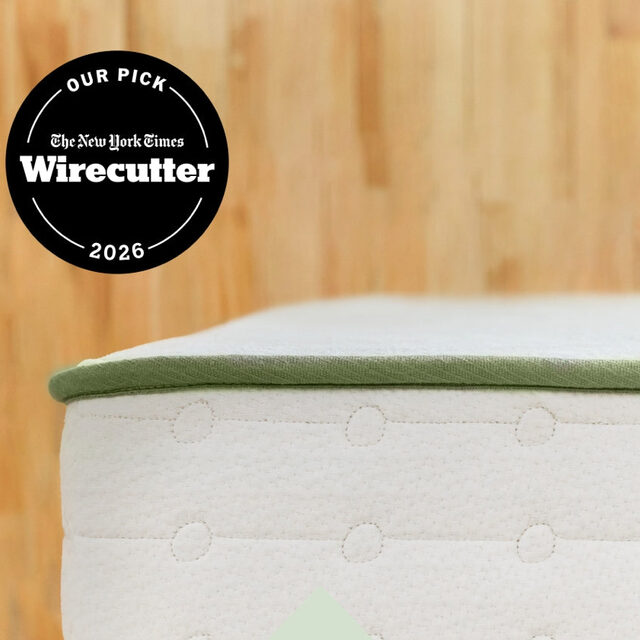
Avocado Green Natural Latex Mattress (Queen)
GOLS-certified natural latex over organic wool over GOTS organic cotton cover. Sleeps cool, supports a 200-lb side sleeper without back pain after 90 nights. Worth the splurge if you buy one big-ticket item.
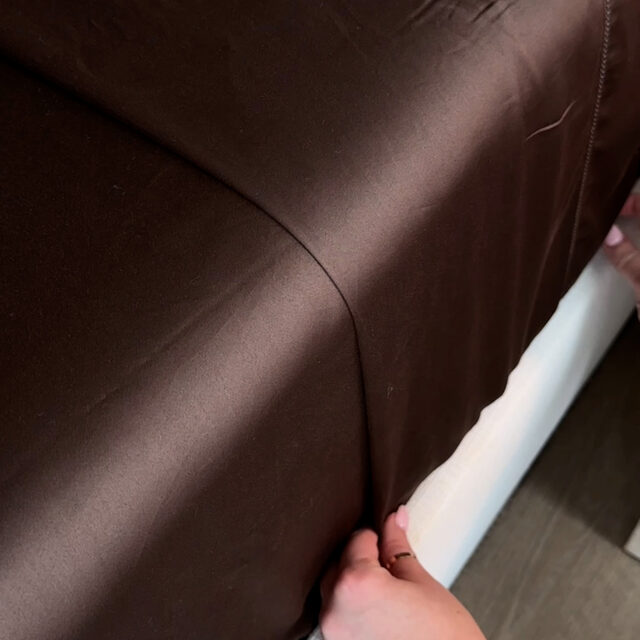
Quince Organic Cotton Sateen Sheets (Queen)
GOTS-certified at the price most brands charge for OCS-only. 400 TC long-staple sateen, softens noticeably by wash 5. The clear value pick for the foundation of a sustainable bedroom.
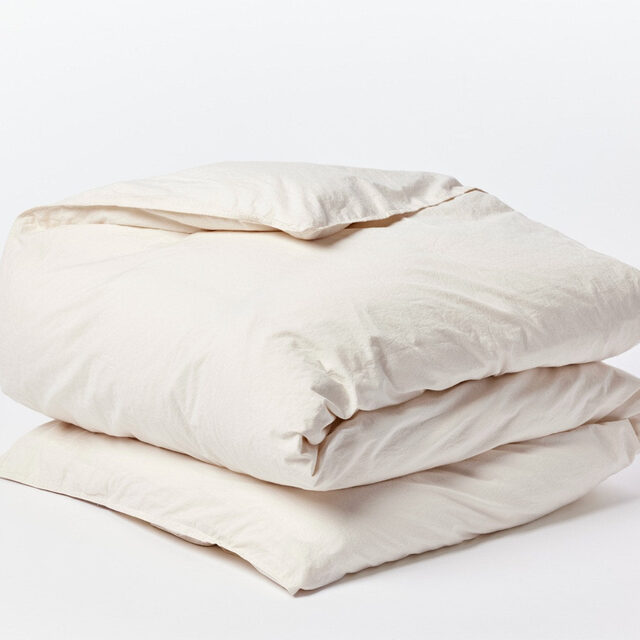
Coyuchi Organic Cotton Duvet Cover (Queen)
Heavyweight percale, GOTS, button closure (not zipper — quieter at night). Survived 12 washes without pilling. The corner ties actually hold a heavy down alternative insert in place.
Frequently Asked Questions
What should I replace first in a sustainable bedroom?
Start with the item that no longer works for you: an uncomfortable pillow, worn sheets, inadequate window coverage or an unsuitable mattress. Keep useful furniture and bedding, and budget for any compatibility changes before ordering.
Does an organic mattress mean a plastic-free mattress?
No. Avocado describes its Green Mattress as GOTS-certified but also discloses elastane in the cover, polypropylene coil pockets and an adhesive within the spring assembly. Organic certification and a plastic-free material requirement are different criteria.
Is the Buffy Cloud comforter filled with eucalyptus?
The All Season Cloud has a lyocell shell and recycled PET fill according to Buffy. The Winter Weight version lists polyester fill and requires dry cleaning, while the All Season version is machine washable.
Are Quince Signature Giza Cotton Sateen sheets certified organic?
The product page identifies Giza cotton and lists an OEKO-TEX STANDARD 100 certificate. It does not identify this sheet set as GOTS-certified or organic.