Sustainable Mattress Toppers: Latex, Wool and Foam Compared (2026)
Compare five mattress toppers by materials, construction, care and return terms, with practical guidance on latex, wool and memory foam.
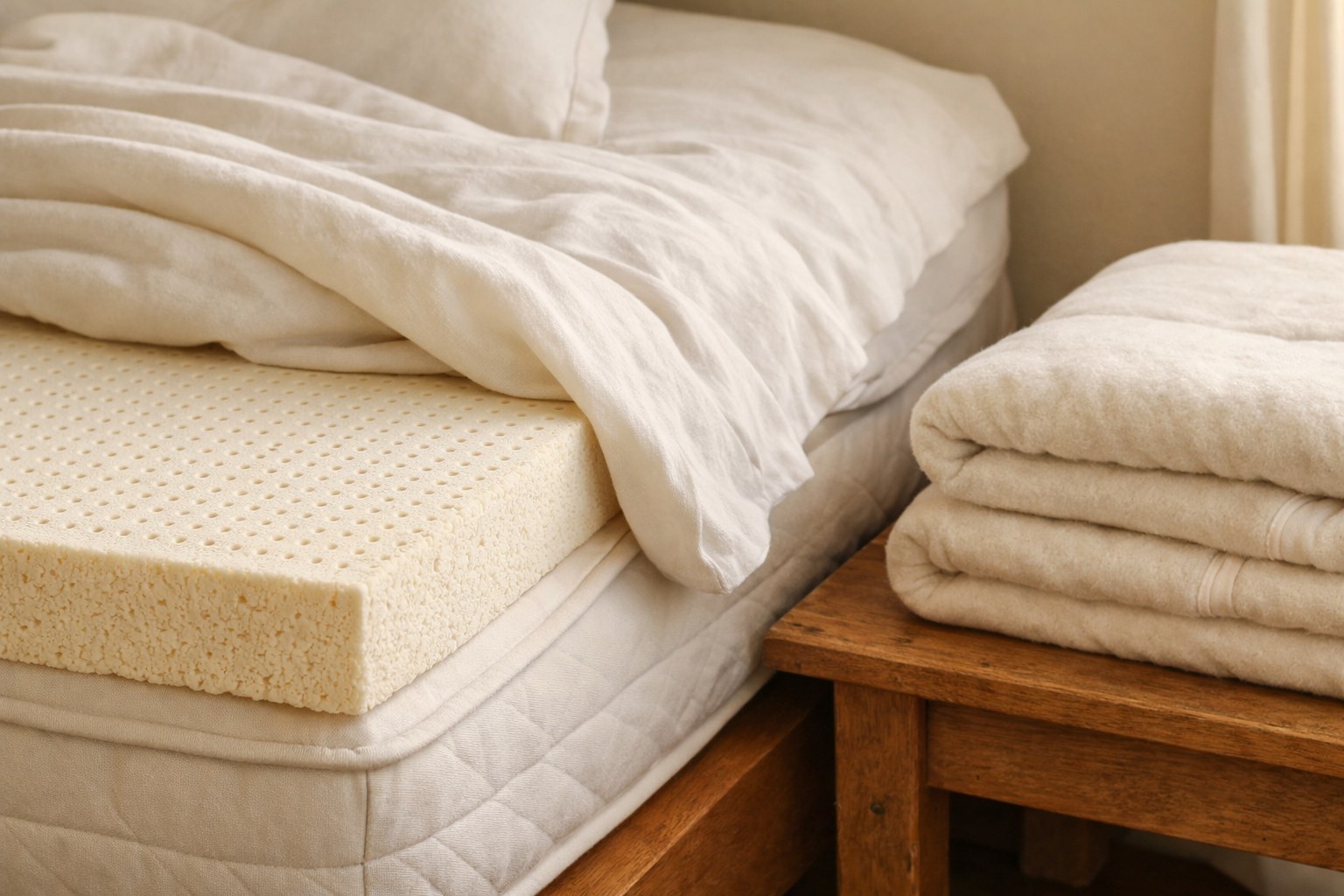
Featured Options Compared in This Guide
Full specs & notes ↓A mattress topper makes sense when you like your mattress’s support but want a different surface feel. Persistent depressions, sagging or rolling toward the center call for assessing the mattress itself: an extra comfort layer cannot rebuild a failed core. Avocado’s replacement guidance makes that distinction explicit.
For a materials-focused purchase, the useful comparison is between a latex layer, wool batting and a foam-and-fiber fill. Their construction, maintenance and return conditions differ substantially. The five options below illustrate those choices; they are not ranked by measured sleep performance or overall environmental impact.
How the five options differ
Dimensions and materials below are manufacturer specifications. Thickness describes different constructions here: two inches of solid latex is not equivalent to two inches of wool batting or loose foam fill.
| Topper | Disclosed construction | Thickness information | Main purchase consideration |
|---|---|---|---|
| Avocado Green Organic Latex | Dunlop latex, wool and cotton ticking blended with 3% elastane | 2-inch latex core; this is not a stated overall height | Choose between plush and firm latex within a layered textile construction |
| Holy Lamb Organics All-Natural Quilted | Premium Eco Wool inside organic cotton fabric | Deep Sleep: approximately 1.5–2 inches; Ultimate: approximately 2.5–3 inches | Two wool-fill amounts, with settling and regular rotation to plan for |
| Naturepedic Wooly Organic Wool | Organic wool batting and organic cotton encasement | Listed at 3 inches | Gentle surface cushioning with a stated 30-night refund trial |
| PlushBeds Organic Latex | Dunlop latex; organic cotton cover is optional | 2 or 3 inches | Thickness and firmness choices, but restrictive returns |
| Coop Sleep Goods Original | Cross-cut memory foam and microfiber fill; polyester microfiber fabric | Described as 5 inches | A synthetic fill alternative with baffle-box construction and a stated 100-night trial |
Avocado versus PlushBeds: layered latex or a configurable core
Avocado’s construction guide specifies a two-inch GOLS-certified organic Dunlop latex layer. Its plush option is listed at 14–19 ILD and its firm option at 20–25 ILD. Above the latex are wool and cotton ticking; the ticking includes 3% elastane. The guide identifies organic certifications for the latex and textile components and states that GREENGUARD Gold applies to the entire topper. Source: Avocado.
This makes Avocado worth considering if you want latex combined with a wool surface layer. Its construction guide does not establish that the cover is removable or washable, so do not select it on that assumption. It also does not provide topper-specific trial or warranty terms.
PlushBeds offers a different decision: choose a two- or three-inch organic Dunlop latex layer, then decide whether to add its GOTS-certified organic cotton cover. The manufacturer describes the thinner option as retaining more of the existing mattress’s feel and the thicker one as adding more cushioning. Neither thickness repairs sagging underneath. Sources: PlushBeds, Avocado’s support guidance.
The key PlushBeds tradeoff is committing to the feel before sleeping on it. Its return-policy section says latex toppers are nonreturnable; a later FAQ describes them as nonreturnable once opened. Neither offers a used-product comfort trial. The page states a five-year limited warranty, which serves a different purpose from a refund for unsuitable firmness. Its firmness selector and explanatory charts also differ in labels and ILD values. Have the seller identify the firmness specification and return eligibility for your selected configuration before ordering. Source: PlushBeds.
The optional PlushBeds cover is removable but designated for spot cleaning, not machine washing. The latex core should not be machine washed or placed in direct sunlight. If easy laundering is essential, budget and plan for a separate washable protector rather than treating the optional cover as one. Source: PlushBeds.
Holy Lamb versus Naturepedic: wool fill and the cost of changing your mind
Holy Lamb’s All-Natural Quilted Topper uses Premium Eco Wool and organic cotton fabric. Its materials description distinguishes that domestic wool from a separate organic wool offering; the All-Natural model should not be described as containing GOTS-certified organic wool based on the brand’s other products. Source: Holy Lamb Organics.
The two loft options offer a concrete choice. For a queen, Holy Lamb lists 9.3 pounds of wool in Deep Sleep and 14 pounds in Ultimate. It positions Deep Sleep as a smaller softness adjustment and Ultimate as a fuller pillow-top feel. More wool is a construction difference, not proof of better pressure relief for every sleeper. Source: Holy Lamb Organics.
Expect some settling: Holy Lamb reports approximately 15–20% initial wool compression during the first few weeks. That is manufacturer guidance, not a comparative test result. It recommends alternating flips and head-to-foot rotations weekly for the first few months, then periodically thereafter. Both adult thickness options require spot cleaning; the company also recommends occasional sunning. Source: Holy Lamb Organics.
Naturepedic’s Wooly is listed at three inches, with GOTS-certified organic cotton and organic wool batting. The product page lists GOTS, MADE SAFE and GREENGUARD Gold certifications. Naturepedic describes the feel as light surface padding with limited sink, making it a candidate for someone who likes a firm mattress but wants a gentler top layer. Its listed height alone does not establish that it cushions more deeply than Holy Lamb’s Ultimate. Source: Naturepedic.
For an uncertain wool buyer, the return terms are a meaningful difference. Naturepedic advertises a 30-night trial with a full refund and free returns, plus a ten-year limited warranty. Holy Lamb’s page allows refunds for unused, unwashed items in original packaging within 30 days of shipment; a used item qualifies for a one-time exchange for equal or lesser value within that window. Keep the original packaging if choosing Holy Lamb. Sources: Naturepedic, Holy Lamb Organics.
Naturepedic also requires spot cleaning and recommends airing, rotating and fluffing. Neither wool option is an adult topper you can routinely put through the washing machine. Both manufacturers describe wool’s moisture-management properties, but those descriptions do not establish which topper will feel cooler in your bedroom.
Where Coop fits in a sustainability comparison
The product at Coop’s linked page is the Original Mattress Topper. It contains cross-cut memory foam and microfiber inside a fabric specified as 100% polyester microfiber. Baffle-box compartments separate the fill. This is a materially different purchase from a solid latex layer or wool batting. Source: Coop Sleep Goods.
Coop lists CertiPUR-US certification for its foam and GREENGUARD Gold certification. Its page describes these in terms of foam content, durability testing and chemical-emission standards. Those claims do not establish organic content, recycled content or an overall environmental advantage. The foam is described as virgin material. Source: Coop Sleep Goods.
Consider Coop if you want a compartmented foam-and-fiber cushion and value its advertised 100-night trial. It does not meet a goal of choosing wool or organic latex as the main fill. Its care instructions require spot cleaning. Also compare actual dimensions: the queen is listed at 58 by 78 inches, while the queen wool toppers above are listed at 60 by 80 inches. Measure your mattress before deciding how much edge coverage you want. Sources: Coop, Holy Lamb, Naturepedic.
Choose around the adjustment you need
- You want latex with a wool layer: consider Avocado’s layered construction, then obtain its applicable care and return terms.
- You already know your preferred latex feel: compare PlushBeds’ thickness options and optional cover, accounting for the lack of a used-product return trial.
- You want to choose between two amounts of wool: compare Holy Lamb’s Deep Sleep and Ultimate, and allow for the stated settling and rotation routine.
- You want organic wool but are unsure about its feel: Naturepedic’s stated refund trial offers more flexibility than Holy Lamb’s exchange provision for used bedding.
- You want foam-and-fiber cushioning: Coop provides that construction and a longer advertised trial, with a synthetic material profile.
Before buying, measure the mattress’s width, length and height, then account for the topper when assessing fitted-sheet depth. Compare the complete purchase—including any optional cover or protector—and the consequence of a poor comfort match. A warranty term does not tell you how many years of comfortable use to expect.
For sustainability, favor specific material and construction information over an unqualified green label. The FTC cautions that broad environmental claims require substantiation and that a certification does not support every possible environmental benefit. Organic content or an emissions certification alone cannot establish that one of these toppers has the lowest lifetime impact. Source: FTC Green Guides summary.
For additional shopping, this Amazon search for Sleep On Latex Pure Green toppers is a search link, not a selected listing or a recommendation from this comparison. Results can vary by seller and configuration. As an Amazon Associate, GreenChoice earns from qualifying purchases.
Sources
- Avocado: Green topper layer construction
- Avocado: deciding between a topper and mattress replacement
- Holy Lamb Organics: All-Natural Quilted Topper
- Naturepedic: Wooly Organic Wool Mattress Topper
- PlushBeds: Organic Latex Mattress Topper
- Coop Sleep Goods: Original Mattress Topper
- Federal Trade Commission: Environmental Claims—Summary of the Green Guides
Products Compared in This Guide
Amazon search for Sleep On Latex Pure Green toppers
Compare current manufacturer specifications, materials, and package options for Amazon search for Sleep On Latex Pure Green toppers.
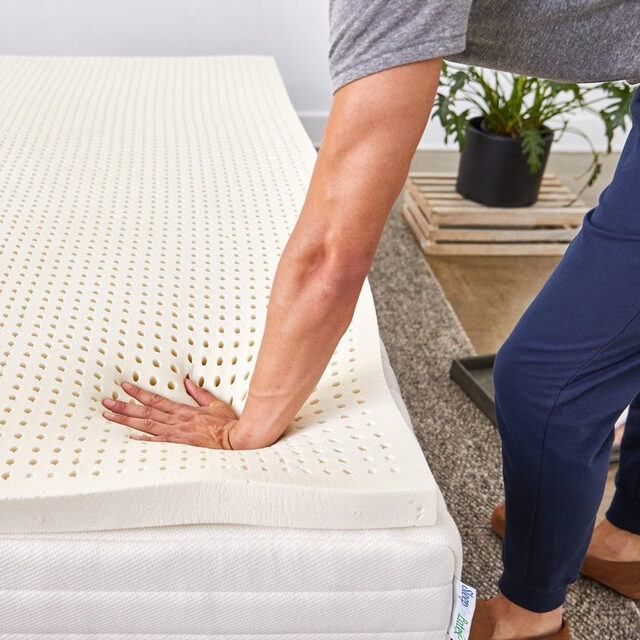
Sleep On Latex Pure Green Natural Latex Topper (3-inch Queen)
GOLS-certified Dunlop latex. 3-inch medium firmness transformed a sagging 7-year-old innerspring without buying a new mattress. Zero off-gassing, holds shape across 60 nights of side sleeping. Best value-to-performance topper in the test.
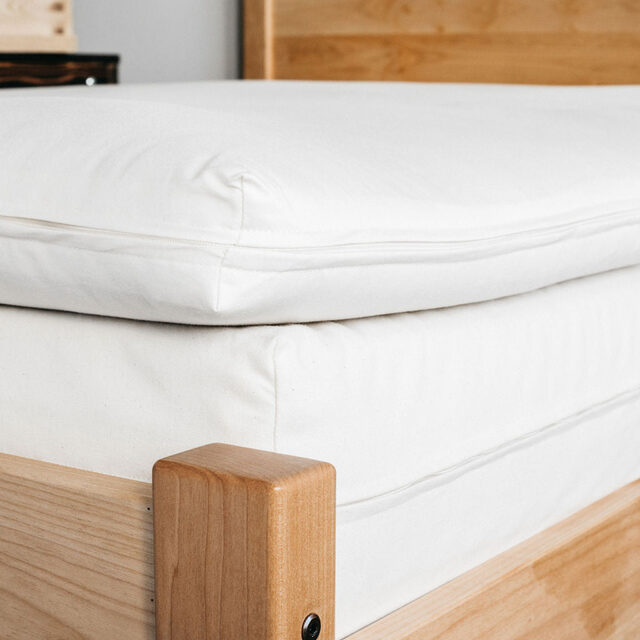
Holy Lamb Organics Wool Topper (Queen)
Eco-Wool fill, GOTS organic cotton shell, made in Washington state. Temperature-regulating across both seasons of testing. Compresses faster than latex (re-fluff weekly) but the wool wicks moisture and runs cooler than any other topper in the test.
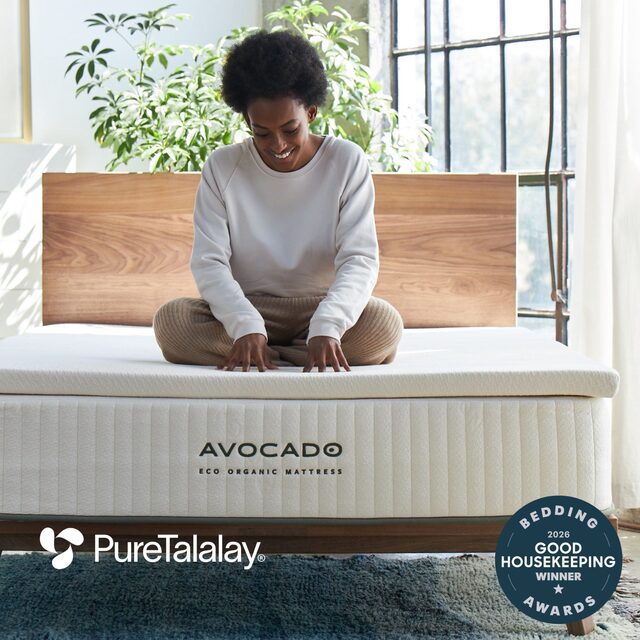
Avocado Green Latex Mattress Topper (Queen)
GOLS-certified latex with GOTS organic cotton cover. The premium pick — denser feel than the Sleep On Latex Pure Green, slightly more support for heavier sleepers. Cover is removable and washable, which the cheaper toppers don't offer.