Organic Duvet Covers Compared, Plus Linen and Lyocell Alternatives
Compare organic cotton duvet covers with linen and lyocell alternatives by material, certification claims, closures, insert fit and laundry needs.
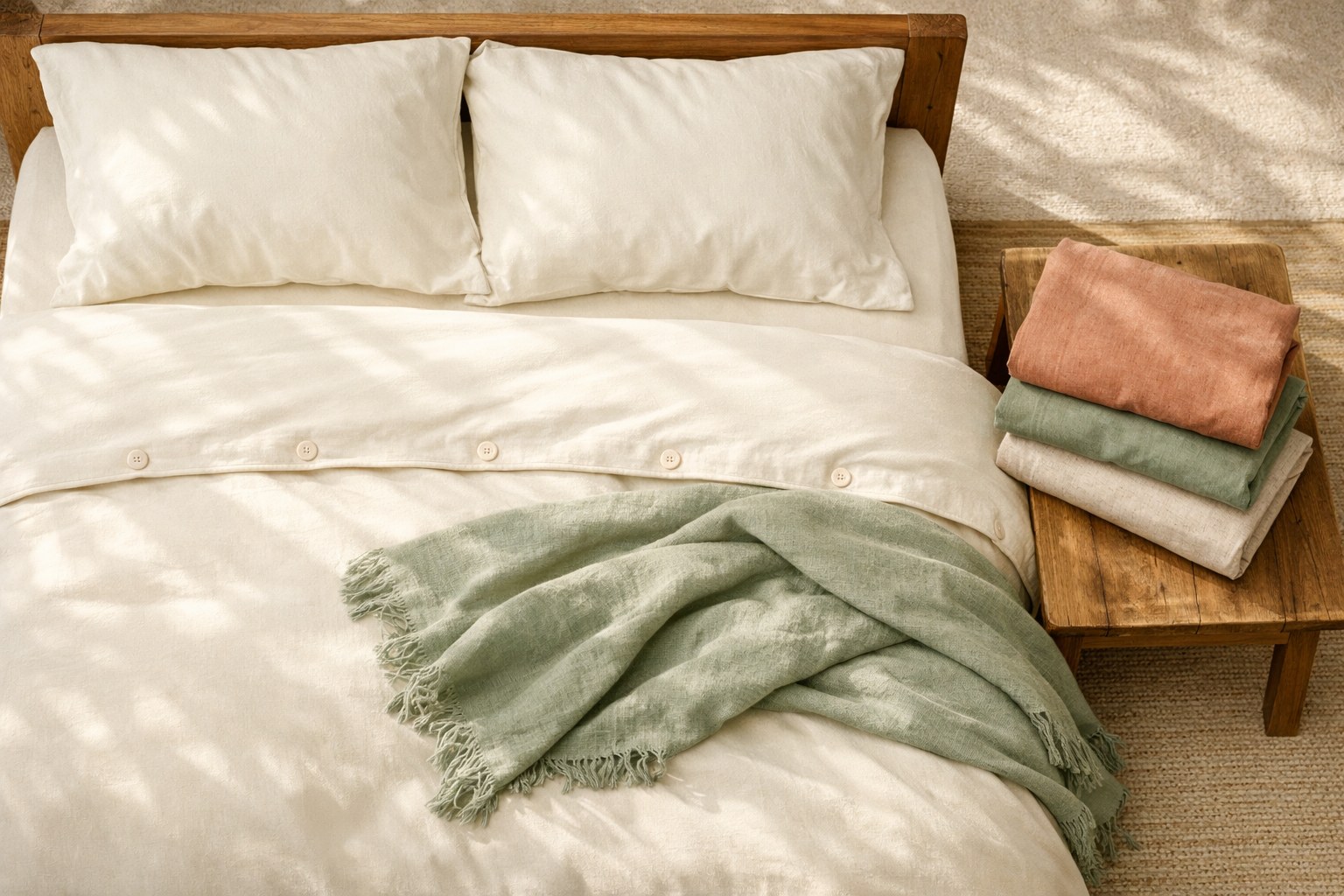
Featured Options Compared in This Guide
Full specs & notes ↓For an organic cotton duvet cover, Boll & Branch’s Signature Hemmed set and Quince’s Luxury Organic Sateen cover offer two concrete construction choices: a hidden zipper or buttons. Both brands specify interior corner ties and long-staple organic cotton. Boll & Branch explicitly identifies its set as GOTS certified; Quince lists organic cotton and OEKO-TEX STANDARD 100 certification without stating GOTS certification on this product page. Boll & Branch, Quince
Linen and lyocell broaden the material choices, but they should sit alongside organic cotton as alternatives. Their fiber names and OEKO-TEX labels do not establish organic status.
Compare the construction first
The specifications below are the manufacturers’ descriptions. They help distinguish fit and daily handling, but do not establish a durability ranking.
| Duvet cover | Material and certification stated by the brand | Closure and insert attachments | Main buying distinction |
|---|---|---|---|
| Boll & Branch Signature Hemmed Duvet Set | Long-staple organic cotton sateen; GOTS and OEKO-TEX STANDARD 100; made in a Fair Trade Certified factory | Hidden zipper; four interior corner ties | Organic cotton set with matching shams |
| Quince Luxury Organic Sateen Duvet Cover | Organic cotton sateen; 300 thread count; OEKO-TEX STANDARD 100 | Buttons and corner ties | Organic cotton option for shoppers who prefer buttons; page displayed sold out on September 5, 2026 |
| MagicLinen Natural Linen Duvet Cover | European flax linen; listed fabric weight of 190 GSM; OEKO-TEX STANDARD 100 | Coconut buttons and interior corner ties | Undyed oatmeal color, with regional and custom sizing options |
| Parachute Linen Duvet Cover | European flax linen; listed fabric weight of 175 GSM; OEKO-TEX STANDARD 100 | Four corner twill ties; closure type not specified on the page | Garment-washed linen with different dimensions from MagicLinen’s US Queen |
| Buffy Breeze Duvet Cover | TENCEL lyocell from eucalyptus; 300 thread count; brand states OEKO-TEX STANDARD 100 Class I | Four extra-large corner ties; closure type not specified on the page | Lyocell alternative with an advertised home trial |
| IKEA STRANDKRYPA, Japan listing | Cotton; 144 thread count; no organic certification stated | Buttons; corner ties not specified | Floral cotton set with a wash limit of 60°C and region-specific sizing |
Organic cotton: Boll & Branch versus Quince
Choose Boll & Branch when you want a coordinated set, a zipper closure and an explicit product-level GOTS claim. Its Signature Hemmed set includes a duvet cover and two shams, or one sham in Twin/Twin XL. The brand describes a smooth sateen surface with some sheen and positions it for year-round use. That description does not establish that it sleeps warmer than another cover. Source
The four interior ties attach to an insert’s corner loops. Before buying, inspect your existing insert for those loops. The hidden zipper closes the opening; the ties serve a separate role in attaching the insert. Boll & Branch calls for cold washing with similar colors, low or medium tumble drying, and avoiding bleach and fabric softener. Source
Choose Quince if you prefer buttons and its listed size fits your insert—subject to availability. Its Luxury Organic Sateen cover also includes corner ties. Quince specifies 300-thread-count organic cotton sateen and names an OEKO-TEX certificate; the page does not state that this cover is GOTS certified. Its care instructions allow cool machine washing with mild detergent, followed by low tumble drying or line drying. Source
Compare the complete purchase: Boll & Branch lists a set with shams, while Quince lists a duvet cover. Quince’s suggestion to shop a different Giza cotton product is a separate option, so do not carry the organic claim over to that item.
Linen: sizing matters more than an upgrade label
MagicLinen and Parachute both describe European flax linen with OEKO-TEX STANDARD 100 certification. Neither linked duvet-cover page states organic certification. MagicLinen specifies Lithuanian production and a prewashed finish; Parachute specifies Portuguese production and garment washing. MagicLinen, Parachute
MagicLinen lists a higher fabric weight, at 190 GSM versus Parachute’s 175 GSM. These are manufacturer specifications, not evidence that one cover will last longer or feel better to you.
The dimensions create a more immediate decision:
- MagicLinen US Queen: 90 × 88 inches.
- Parachute Full/Queen: 90 × 92 inches.
Those covers differ by four inches in listed length despite overlapping bed-size labels. Measure your insert and compare both dimensions before choosing. MagicLinen also provides separate regional size charts and offers custom sizing, which may help with an unusual insert. MagicLinen sizing, Parachute sizing
For a relaxed finish, MagicLinen treats natural creasing as part of the fabric’s appearance. For a smoother presentation, its instructions allow medium-temperature ironing while slightly damp. It recommends gentle washing, avoiding high heat, and air drying or low tumble drying. Its return terms cover unused, unwashed items within 30 days of delivery, with exclusions and shipping conditions. Decide whether you like the texture before laundering; the return window is not a wash trial. Source
Parachute lists machine washing and a 60-day window for eligible returns. Its product page does not spell out washing temperatures or establish which used items qualify for return, so those details remain relevant before ordering. Source
Lyocell and ordinary cotton: useful alternatives with different requirements
Buffy Breeze is an option if you want to consider lyocell instead of organic cotton. Buffy specifies eucalyptus-derived TENCEL lyocell, four corner ties and cold washing with low tumble drying. Its Full/Queen cover measures 90 × 90 inches—different again from both linen covers above. Source
Buffy markets cooling and moisture-management benefits. Those claims do not predict your overnight comfort with a particular insert. Its advertised seven-night home trial provides a practical way to assess preference: the brand describes a temporary card hold, followed by charging after the trial. Final-sale orders and orders paid through Shop Pay, Apple Pay or PayPal are excluded from that trial. The page separately advertises 50-night returns. Source
IKEA STRANDKRYPA is a cotton comparison, not an organic recommendation. The Japanese listing specifies cotton, buttons and a maximum machine-wash temperature of 60°C. That care allowance may matter if a warmer wash is part of your laundry routine. The linked set contains a 200 × 200 cm cover and two 50 × 60 cm pillowcases; it should not be treated as a US Queen listing or proof of US availability. Source
What certification can tell you
OEKO-TEX STANDARD 100 concerns testing textiles and their components against harmful-substance criteria. Its requirements vary by intended use: Class I has the strictest limits and covers products for children up to age three, while Class II includes bedding with direct skin contact. The standard uses substance limits; it does not mean every chemical is absent. OEKO-TEX
Use that label for its stated purpose. It does not establish that a fiber is organic or that a duvet cover will resist pilling, fading or closure failure for a particular number of years. Likewise, Boll & Branch’s GOTS claim is not a reason to predict a longer lifespan than the alternatives.
For this purchase, start with your nonnegotiable requirement: an explicit GOTS claim, a preferred fiber, a particular closure or a warmer permitted wash. Then match the cover’s dimensions and attachments to your insert. Those differences provide a firmer basis for choosing than promised wash counts or a universal winner.
For more on bedding labels, see our GOTS versus OEKO-TEX guide.
As an Amazon Associate, GreenChoice earns from qualifying purchases. You can also search Amazon for Magic Linen European flax duvet covers. This is a search link; results may include other brands, sizes and materials.
Sources
Products Compared in This Guide
Magic Linen European flax duvet covers
Compare current manufacturer specifications, materials, and package options for Magic Linen European flax duvet covers.
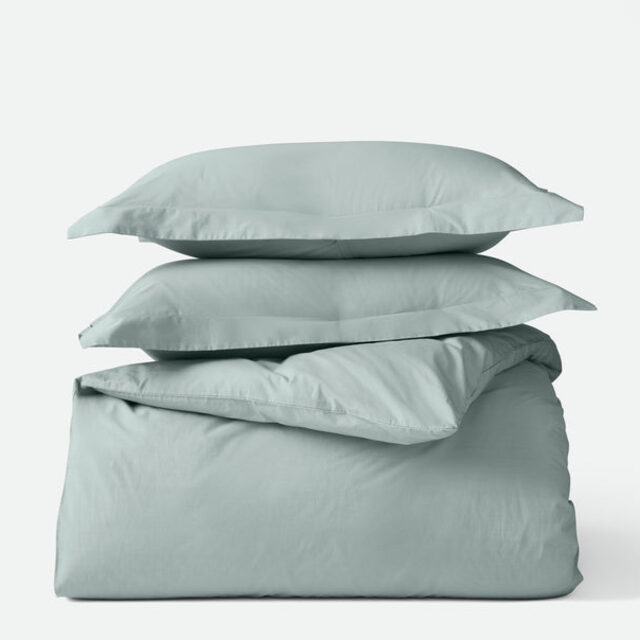
Coyuchi Organic Percale Duvet Cover (Queen)
GOTS-certified, heavyweight percale, button closure. Survived 52 washes (one per week for a year) with no pilling, no thinning, no fading. The corner ties actually hold a heavy insert in place. The reference standard.
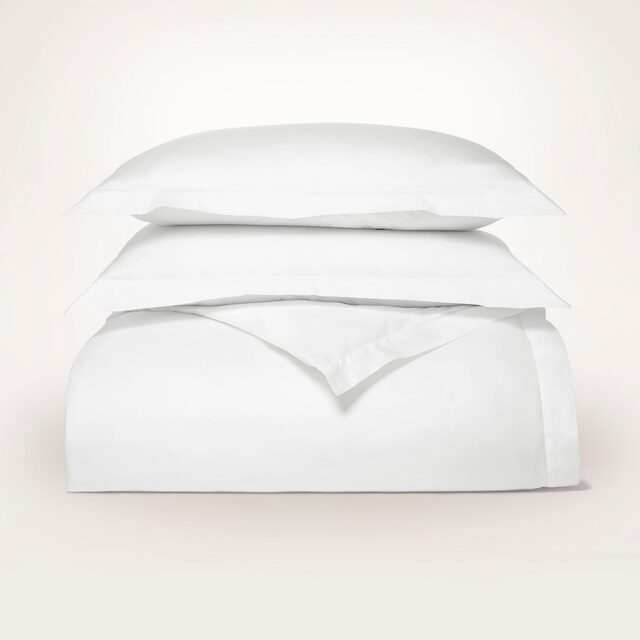
Boll & Branch Organic Sateen Duvet Cover (Queen)
GOTS + Fair Trade certified, 300 TC sateen, silky from wash 1. Slight pilling at the button placket after 30 washes — manageable. Worth the premium if you prefer sateen's smoother hand over percale crispness.
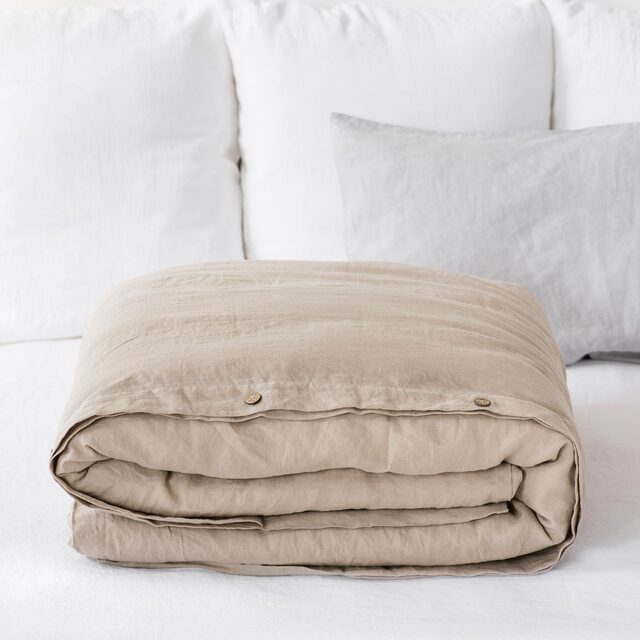
Magic Linen European Flax Duvet Cover (Queen)
OEKO-TEX certified European flax linen. Wrinkles aggressively (the linen look) but softens beautifully with washes 5-15. Cool in summer, layers warm in winter. Best linen value in the test.