Eco Mattress Protectors 2026: Cotton, Wool, and Waterproof Barriers Compared
Compare Naturepedic, Avocado, and Holy Lamb Organics mattress protectors by barrier materials, spill limitations, fit, washing, and warranty terms.
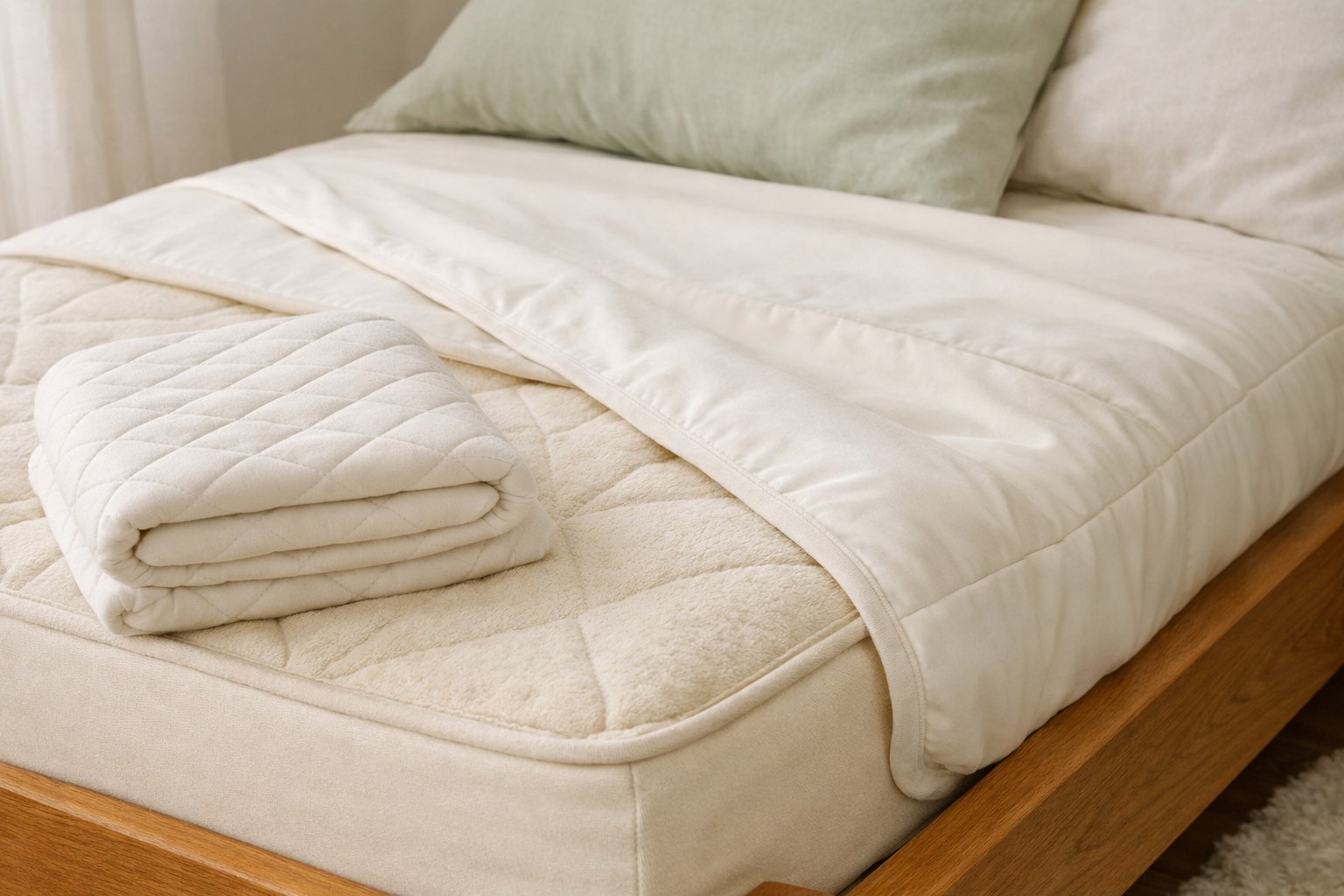
Featured Options Compared in This Guide
Full specs & notes ↓The useful dividing line is whether you need a washable absorbent layer or a barrier against spills. Avocado’s quilted cotton pad is explicitly non-waterproof. Holy Lamb Organics describes its wool barrier as water-repellent. Naturepedic and Avocado sell cotton protectors with polyurethane barriers, but Avocado expressly limits its model to everyday accidents and prompt cleanup. Those differences matter more than the word “organic” in the product name. Naturepedic, Avocado waterproof protector, Avocado cotton pad, Holy Lamb Organics.
Four constructions and their practical tradeoffs
The protection descriptions below are the manufacturers’ stated uses, not comparative spill-test results.
| Protector | Disclosed construction | Stated protection | Main buying consideration |
|---|---|---|---|
| Naturepedic Waterproof Organic Mattress Protector Pad | Organic cotton jersey with a thin TPU barrier | Waterproof protection against spills | Listed fit is approximately 9–16 inches; published drying instructions conflict |
| Avocado Organic Waterproof Mattress Protector | Two organic cotton layers around polyurethane | Everyday spills and occasional accidents, with prompt cleanup | Standard pocket fits 6–16 inches; deep pocket fits up to 22 inches; excludes heavy or prolonged liquid exposure from intended use |
| Avocado Organic Mattress Pad Protector | Quilted organic cotton, cotton skirt, latex-rubber perimeter elastic | Absorbent, non-waterproof | Suits perspiration and body-oil protection; manufacturer rules out bed-wetting and nighttime incontinence |
| Holy Lamb Organics Wool Moisture Barrier | Tightly woven, lightly felted pure wool | Water-repellent | Flat pad goes beneath the fitted sheet; requires air drying and allowance for shrinkage |
Naturepedic: a fitted cotton-and-TPU spill barrier
Naturepedic specifies organic cotton jersey and TPU waterproofing, with an elastic perimeter. Its product page lists GOTS certification through Control Union and MADE SAFE certification, and says the construction excludes vinyl/PVC and phthalates. These are specific material and certification claims; they do not establish that it will feel cooler or quieter than another protector in your bedroom. Source: Naturepedic product page.
This is a relevant candidate when you want a fitted protector with an explicitly identified liquid barrier and your mattress falls within its stated depth range. Measure any topper together with the mattress if the protector will cover both. The published fit range gives you a concrete reason to consider another model for a thicker bed.
Laundry instructions need resolving before a hot wash or dryer cycle. The product page says to avoid bleach and tumble dry low, but a later section permits temperatures up to medium/hot. The separate care page repeats the warmer guidance. Follow the instructions supplied with your exact protector and ask Naturepedic to resolve a conflicting label; the website does not provide one consistent temperature limit. Sources: product instructions, Naturepedic care guidance.
Avocado waterproof: deeper fit options, explicit exposure limits
Avocado discloses polyurethane between two cotton layers. It says the polyurethane uses Susterra propanediol sourced from corn starch. That describes a feedstock; the finished barrier remains polyurethane. The corn reference is not a reason to treat this protector as plastic-free or compostable. Source: Avocado waterproof protector.
The most consequential detail is in its performance explanation: Avocado says the barrier is intended to give time for prompt cleanup and is not intended for heavy or prolonged liquid exposure. It also says protection can diminish with use and laundering. Despite the product’s waterproof name, this is a poor match when liquid may remain on the bed for an extended period.
Its deep-pocket option is useful for mattresses and toppers that exceed the stated fit of Naturepedic’s protector. Wash before use because Avocado intentionally allows for cotton shrinkage. The instructions prohibit bleach and ironing and permit low tumble drying or line drying until completely dry. Source: Avocado specifications and care.
Avocado cotton pad: washable padding without a waterproof coating
Avocado’s similarly named Organic Mattress Pad Protector is a different purchase. It has quilted cotton padding and a cotton skirt, with a latex-rubber elastic band around the perimeter. Avocado says it contains no polyurethane or waterproof coating and explicitly identifies it as unsuitable for bed-wetting or nighttime incontinence. Source: Avocado cotton pad.
Choose this construction when your priority is a washable layer for perspiration and skin oils, and you accept that absorbed liquid can reach the mattress. It does not fulfill the same role as a spill barrier. Its care instructions are straightforward: wash separately in cold water, use low tumble drying or line drying, and avoid bleach and ironing.
Holy Lamb Organics wool: no membrane, but more drying constraints
Holy Lamb Organics identifies its Wool Moisture Barrier as pure wool, densely woven and lightly felted to repel water. It lies over the mattress or topper and under a fitted sheet. The page does not state a liquid capacity or containment duration, so its water-repellent description should not become a promise about a full spill or repeated accidents. Source: Holy Lamb Organics moisture barrier.
Wool is the option here for someone seeking a pad without a synthetic membrane who can accommodate air drying. The product page specifies cold washing, no wringing, and no machine drying. Its more detailed care guide recommends soaking and spinning to limit shrinkage; it makes a specific exception allowing moisture barriers on a normal wash cycle, while warning that this causes more shrinkage. Do not apply that exception to the brand’s other wool bedding. Sources: moisture barrier instructions, Holy Lamb Organics care guide.
Match the protector to the mess and laundry routine
For perspiration and body oils with little spill risk, Avocado’s cotton pad offers an absorbent construction without a waterproof coating. For occasional spills, compare Naturepedic’s stated waterproof construction with Avocado’s explicit prompt-cleanup limitation and deeper fit options.
For repeated bed-wetting or prolonged liquid exposure, the cotton pad is expressly unsuitable, Avocado’s waterproof model has an intended-use limitation, and Holy Lamb’s wool page provides no containment specification. Naturepedic states waterproof protection but supplies no duration or liquid-volume specification. That leaves no basis here for naming a dependable heavy-exposure winner. Ask specifically about overnight pooling, repeated accidents, and coverage for damage to the mattress beneath it before relying on a protector for that use. Sources: Naturepedic, Avocado waterproof, Avocado cotton, Holy Lamb Organics.
For frequent laundry, consider drying access alongside materials. A wool pad that must air dry requires a different changeover plan from a cotton protector that permits low tumble drying. A spare protector can be useful when the bed needs to be remade before the washed one is dry.
Organic certification does not identify every layer
GOTS covers textile processing, traceability, chemical inputs, and environmental and social requirements. Its rules allow specified non-organic materials; certification is not a declaration that every component is organic cotton. GOTS also distinguishes a correctly labelled finished product from a seller’s reference to certified fabric or a certified factory. Source: GOTS questions and answers.
For these protectors, read the construction and certification together. Naturepedic lists both GOTS certification and TPU. Avocado calls its waterproof protector GOTS-certified while disclosing polyurethane. Holy Lamb’s brand name and general discussion of organic materials should not be read as proof that this particular wool barrier carries finished-product organic certification.
Mattress warranties and infant beds require separate decisions
A protector warranty and a mattress warranty cover different products. Avocado lists a one-year limited warranty for mattress pad protectors, while its mattress terms exclude specified stains, unsanitary conditions, and liquid damage. Buying a protector does not establish reimbursement for a mattress damaged beneath it. Keep the receipt and read the terms for the mattress you own. Source: Avocado warranty.
Requirements also differ by brand. Holy Lamb Organics’ care page says a natural-fiber mattress protector is required for its mattress warranty. Naturepedic recommends waterproof pads for its adult mattresses and toppers and warns that liquid exposure may damage them and void coverage. Those statements should not be generalized to every mattress. Sources: Holy Lamb Organics care, Naturepedic care.
For infants, do not transfer an adult-bed padding or layering arrangement into a crib. NICHD recommends a firm, flat, level infant sleep surface with a fitted sheet as the only covering, without loose or soft bedding. A product offered in a crib size is not, by itself, evidence that adding it meets that guidance. Source: NICHD Safe Sleep Environment.
Sources
- Naturepedic Waterproof Organic Mattress Protector Pad
- Naturepedic product care
- Avocado Organic Waterproof Mattress Protector
- Avocado Organic Mattress Pad Protector
- Holy Lamb Organics Wool Moisture Barrier
- Holy Lamb Organics product care
- GOTS questions and answers
- Avocado warranty terms
- NICHD Safe Sleep Environment
Products Compared in This Guide
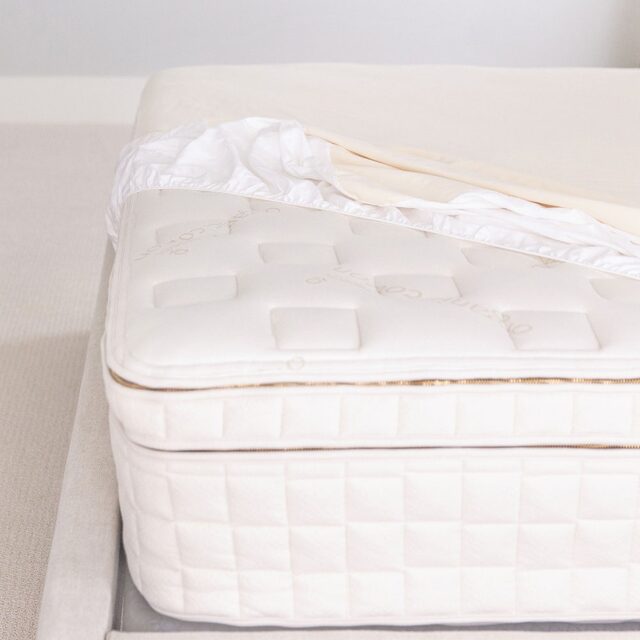
Naturepedic Waterproof Organic Cotton Mattress Protector
GOTS organic cotton surface with food-grade polyurethane waterproof backing. Stopped a full cup of coffee, two reflux nights, and a leaked bottle. Quiet (no crinkle sound), washable. The polyurethane is synthetic but it's the inner layer that never touches skin.
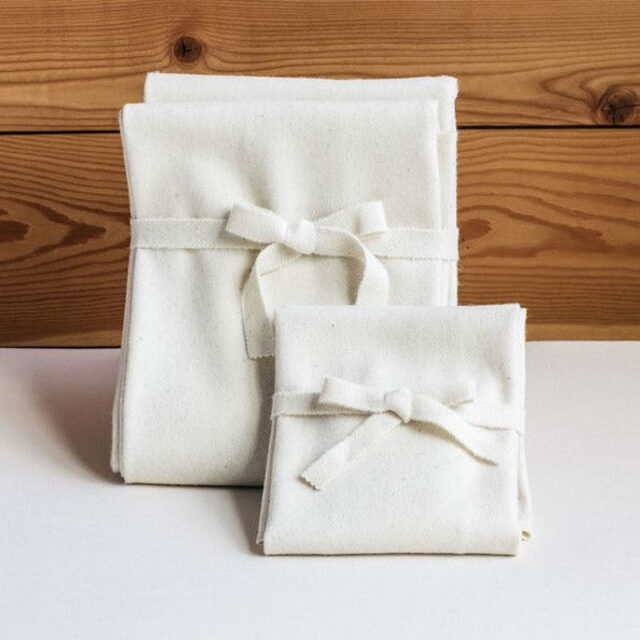
Holy Lamb Organics Wool Puddle Pad
100% wool — uses lanolin and dense weave for natural water resistance. Handles dribbles and small spills perfectly. Cannot handle a full bottle leak or reflux scale. Best as a layered defense, not a primary barrier.
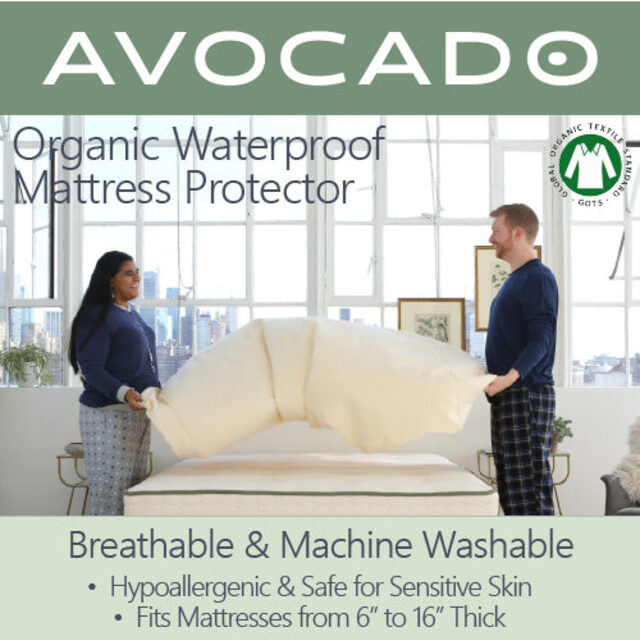
Avocado Organic Mattress Protector
GOTS organic cotton terry surface with polyurethane backing. Slightly less robust waterproof than Naturepedic but quieter and has a more cotton-like hand. Good middle-ground pick.
Frequently Asked Questions
Does an organic mattress protector contain polyurethane?
Some do. Naturepedic identifies a TPU barrier in its waterproof protector, and Avocado discloses polyurethane in its waterproof model. Avocado's separate cotton mattress pad has no waterproof coating. Organic certification does not mean every component is cotton.
Can Holy Lamb Organics wool replace a waterproof protector?
Its Wool Moisture Barrier is described as water-repellent, with no stated liquid capacity or hold time. Choose it for its wool construction only if you can accept that limitation; do not assume it provides containment for repeated bed-wetting.
Does buying a protector guarantee mattress warranty coverage?
No. Avocado's mattress warranty excludes specified stain, liquid-damage, and unsanitary-condition claims. Holy Lamb Organics says a natural-fiber protector is a mattress warranty requirement. The protector's own warranty is separate from the mattress warranty.